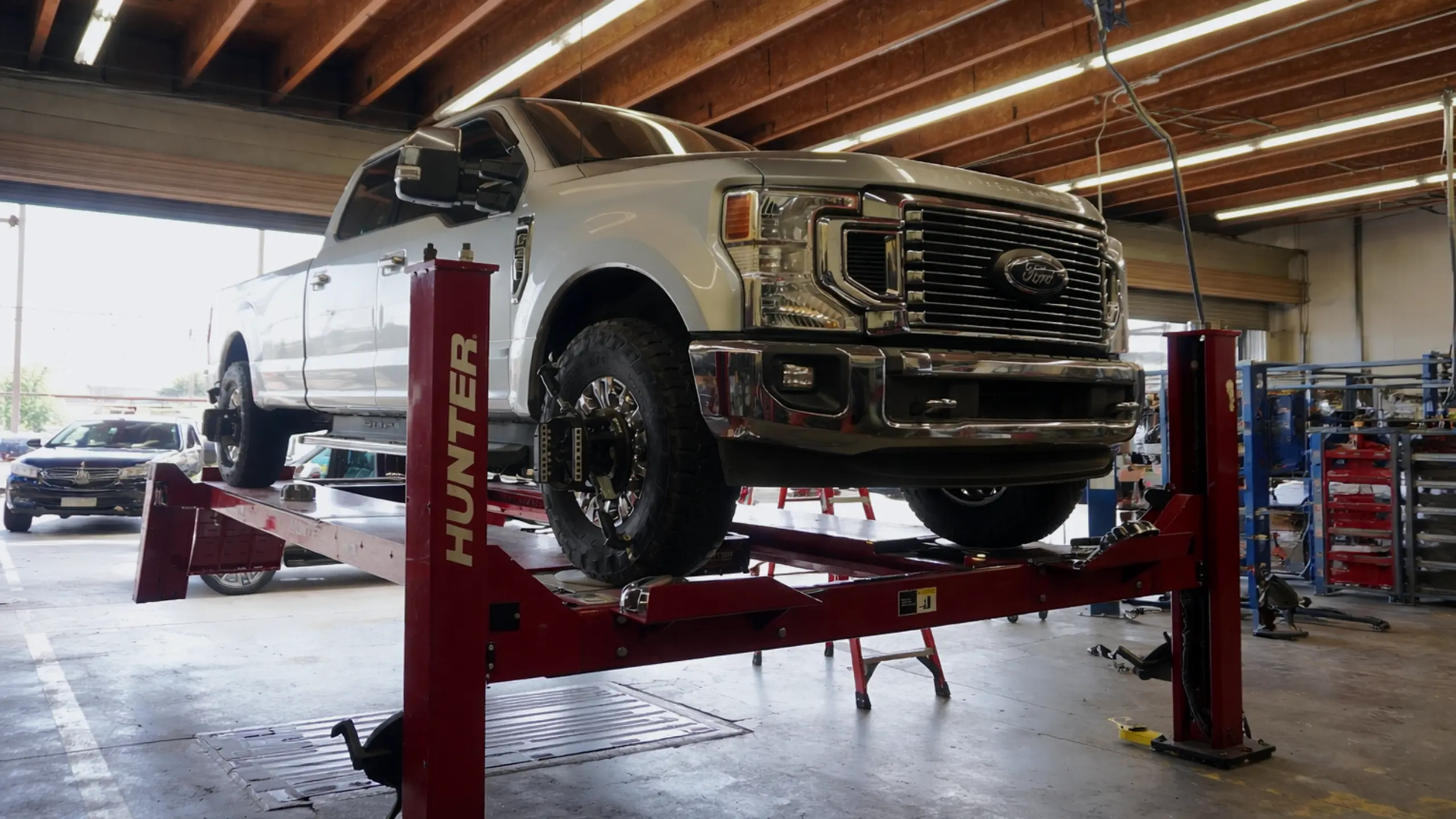
A vehicle’s interaction with the road involves far more than tire contact alone. Beneath the chassis, the suspension system manages forces, maintains stability, and protects both occupants and vehicle components, playing a central role in steering response, braking behavior, and ride control under real driving conditions.
From a technical standpoint, suspension performance directly affects tire grip, comfort, ground clearance, and steering effectiveness across everyday and demanding scenarios. Understanding how suspension systems operate is essential for making informed maintenance and upgrade decisions focused on reliability and handling.
In professional workshops, suspension diagnostics are conducted as part of an integrated evaluation that includes alignment, suspension travel, tire condition, and component wear—factors that collectively determine vehicle safety and performance.
This guide outlines the core principles and components of suspension systems, connecting technical theory with practical application to support sound maintenance and performance decisions.
What Is a Vehicle Suspension System?
At its core, a vehicle suspension system is the interconnected set of springs, shock absorbers, and linkages that connects a vehicle’s chassis to its wheels. Its primary role is to manage the dynamic forces generated by the road surface and vehicle movement, ensuring stability and control.
Definition and purpose
The primary purpose of the suspension system is to isolate the vehicle body from road irregularities while keeping the tires consistently in contact with the surface.
This balance is essential for maintaining tire grip, driving comfort, and effective braking performance. A properly functioning suspension ensures that road impacts are managed without excessive body movement or loss of control.
Why suspension matters for safety and control
Suspension performance plays a direct role in vehicle safety. By controlling body motion and maintaining consistent tire contact, the system supports stable handling, accurate steering input, and predictable braking behavior. In professional evaluations, suspension condition is closely linked to factors such as tire pressure consistency and overall vehicle stability, particularly during emergency maneuvers or abrupt direction changes.
Understanding how suspension systems work is a key step toward identifying handling issues early and making informed maintenance or upgrade decisions.
Main Functions of Suspension Systems
The suspension system performs several critical functions that collectively contribute to a vehicle’s overall performance and safety profile.
Stability, handling, and braking
One of the suspension’s primary functions is to maintain vehicle stability during acceleration, braking, and cornering. This is achieved through several coordinated effects:
Controlling body movement and limiting excessive roll or pitch
Allowing the tires to maintain consistent contact with the road surface
Improving tire grip and supporting predictable steering response
Enhancing control during sudden maneuvers or hard braking
From a technical perspective, suspension behavior works in close coordination with the steering system, ensuring that driver inputs translate into controlled vehicle movement rather than exaggerated body motion.
This relationship is essential for maintaining directional control and reducing stopping distances under load.
Ride comfort and vibration control
Beyond stability, the suspension system is responsible for managing vibrations and impacts generated by uneven road surfaces. Through controlled suspension travel, the system absorbs energy from bumps and pavement irregularities, which helps to:
Reduce the forces transmitted to the vehicle structure
Minimize vibrations felt by occupants
Improve overall driving comfort on rough or poorly maintained roads
Effective vibration control plays a key role in driving comfort, especially during extended driving. In professional vehicle assessments, ride quality is often evaluated alongside noise and harshness levels as indicators of overall suspension condition.
Load support and road contact
Suspension systems also support the full weight of the vehicle, including passengers and cargo, while preserving consistent road contact. Proper load management contributes to:
Stable ground clearance
Controlled suspension compression under load
Balanced handling and braking performance
When suspension components are worn or incorrectly calibrated, tire contact becomes inconsistent, leading to reduced traction and increased mechanical stress. Maintaining this balance is essential for both vehicle safety and long-term reliability.
Key Components of a Suspension System
A suspension system is comprised of several interconnected components, each with a specific function, working in concert to manage vehicle dynamics.
 Shock absorber and suspension spring assembly installed on vehicle
Springs
Springs are the primary load-bearing elements of the suspension system. Their function is to support the vehicle’s weight and absorb energy generated by road impacts. Their characteristics directly influence:
Driving comfort
Handling response
Ground clearance under load
In performance-oriented setups, components like lowering springs may be used to reduce ride height, altering suspension geometry and vehicle behavior.
Shock absorbers and struts
Shock absorbers, also known as dampers, control the oscillation created when springs compress and extend. Their role includes:
Regulating suspension movement through controlled rebound damping
Preventing excessive bouncing
Helping maintain consistent tire contact
Struts combine damping functions with structural support and often serve as mounting points for other suspension elements. When shock absorbers or struts are worn, suspension travel becomes uncontrolled, leading to reduced stability, uneven tire wear, and diminished ride quality.
Control arms, bushings, and sway bars
Control arms connect the wheel assembly to the vehicle structure, guiding wheel movement throughout the suspension’s range of motion. Supporting components contribute as follows:
Bushings reduce vibration and allow controlled articulation
Sway bars limit body roll during cornering
Mounting points distribute forces across the suspension system
Worn bushings or mounting points are common issues identified during professional inspections, often detected through excessive play or misalignment.
Common Types of Suspension Systems
Suspension systems vary widely in design, each offering different trade-offs in terms of performance, comfort, and complexity.
 Worn suspension component showing grease leakage and joint damage
Independent suspension
Independent suspension systems allow each wheel to move vertically without directly affecting the opposite side. This configuration provides several advantages:
Improved ride quality
Better handling on uneven pavement
More consistent tire grip
More accurate alignment control
These systems are widely used in passenger vehicles due to their ability to balance driving comfort with precise steering response.
Solid axle suspension
In a solid axle suspension, both wheels on the same axle are connected by a single rigid assembly. This design prioritizes:
Strength and durability
Load capacity
Off-road performance
While robust and reliable, solid axle systems typically transmit more road irregularities to the vehicle body, which can reduce ride comfort and handling precision on paved roads.
Air and adaptive suspension systems
Advanced suspension technologies include air suspension and adaptive suspension systems. These systems provide:
Adjustable ride height
Variable spring rates
Real-time response to road conditions and driver inputs
Air suspension replaces conventional coil springs with air springs, while adaptive systems use electronic sensors and actuators to adjust damping behavior, offering a balance between comfort and sporty handling.
How Suspension Affects Tire Wear and Performance
The condition and type of a vehicle’s suspension system have a direct and significant impact on tire wear and overall vehicle performance.
From an industry perspective, organizations such as SEMA emphasize the importance of maintaining proper suspension geometry and alignment to ensure optimal tire performance, even wear patterns, and safe vehicle operation across different driving conditions.
 Tire and suspension clearance on lifted truck affecting alignment and tire wear
Uneven tire wear and alignment issues
Worn suspension components can alter wheel alignment angles, leading to uneven contact between the tire and the road surface. Common contributing factors include:
Improper camber adjustment
Excessive toe variation
Inconsistent suspension movement
In professional evaluations, suspension condition is always reviewed alongside tire pressure consistency and steering response to prevent irregular tread wear and reduced tire lifespan.
Impact on vehicle performance and costs
Suspension-related tire wear affects more than just maintenance expenses. Progressive degradation can result in:
Longer braking distances
Reduced cornering stability
Less predictable steering behavior
Unresolved suspension issues often lead to premature tire replacement and increased strain on steering components, increasing long-term operating costs.
Common Suspension Problems and Warning Signs
Suspension issues often develop gradually, making early warning signs easy to overlook. Recognizing these symptoms in time is essential to prevent further component wear, compromised handling, or safety risks.
Noises, bouncing, and poor handling
Common indicators of suspension problems include:
Clunking or rattling sounds over bumps
Excessive bouncing after road irregularities
Reduced steering precision
Increased body roll
Delayed response to driver input
These symptoms typically point to worn bushings, loose mounting points, or degraded shock absorbers.
Safety risks of worn components
The safety risks associated with worn suspension components include:
Reduced vehicle stability
Compromised handling during sudden maneuvers
Increased braking distances due to loss of tire contact
In extreme cases, failure of critical components such as ball joints or control arms can result in loss of steering or wheel control.
Suspension Maintenance and Safety Standards
Regular maintenance and adherence to safety standards are vital for ensuring a suspension system performs optimally and safely.
Preventive maintenance basics
Preventive suspension maintenance focuses on early detection rather than corrective repair. Typical inspection points include:
Shock absorber leaks
Damaged bushings
Worn bump stops
Uneven ride height caused by fatigued springs
In professional environments, suspension checks are commonly performed alongside alignment verification, tire pressure assessment, and steering evaluation.
Safety standards and regulatory guidelines
Suspension systems are subject to established safety requirements designed to ensure predictable vehicle behavior under normal and emergency conditions. In the United States and many international markets, regulatory frameworks such as DOT oversight and Federal Motor Vehicle Safety Standards (FMVSS) define baseline performance and durability criteria for steering and suspension components.
From a practical standpoint, adherence to these standards helps ensure that replacement parts and suspension configurations maintain compatibility with original vehicle safety parameters. For technicians and informed vehicle owners, aligning maintenance practices with recognized safety guidelines reinforces trust, compliance, and long-term vehicle integrity.
Why Suspension Knowledge Matters
Understanding the intricacies of your vehicle’s suspension system offers tangible benefits that extend beyond mere technical curiosity.
Better safety and reliability
Suspension awareness helps drivers and technicians identify:
Early changes in handling
Variations in ride quality
Reductions in vehicle stability
This enables proactive maintenance and more predictable vehicle behavior under varying conditions.
Smarter maintenance and tire decisions
Suspension knowledge supports better decision-making by helping evaluate:
Inspection results
Alignment recommendations
Component replacement needs
Because suspension condition directly influences tire wear and performance, informed decisions help prevent unnecessary costs and preserve long-term vehicle value.
Conclusion: Suspension as a Core Vehicle System
The suspension system is far more than just a collection of parts designed for comfort; it is a fundamental pillar of a vehicle’s safety, handling, and overall performance.
From the springs that bear the load to the shock absorbers that control motion and the control arms that guide the wheels, each component plays a crucial role in how your vehicle interacts with the road.
Neglecting its condition can lead to compromised safety, reduced performance, and increased long-term costs.
Long-term performance and safety benefits
Investing in the proper maintenance and understanding of your suspension system yields significant long-term benefits. A well-maintained suspension ensures optimal tire wear, contributes to effective braking and steering, and provides a stable and comfortable driving experience.
For those seeking to enhance their vehicle’s capabilities, understanding the fundamentals of suspension is the essential first step before considering performance upgrades. By prioritizing suspension health, you are investing in the longevity, safety, and driving enjoyment of your vehicle for years to come.