
What is a Wheel Alignment?
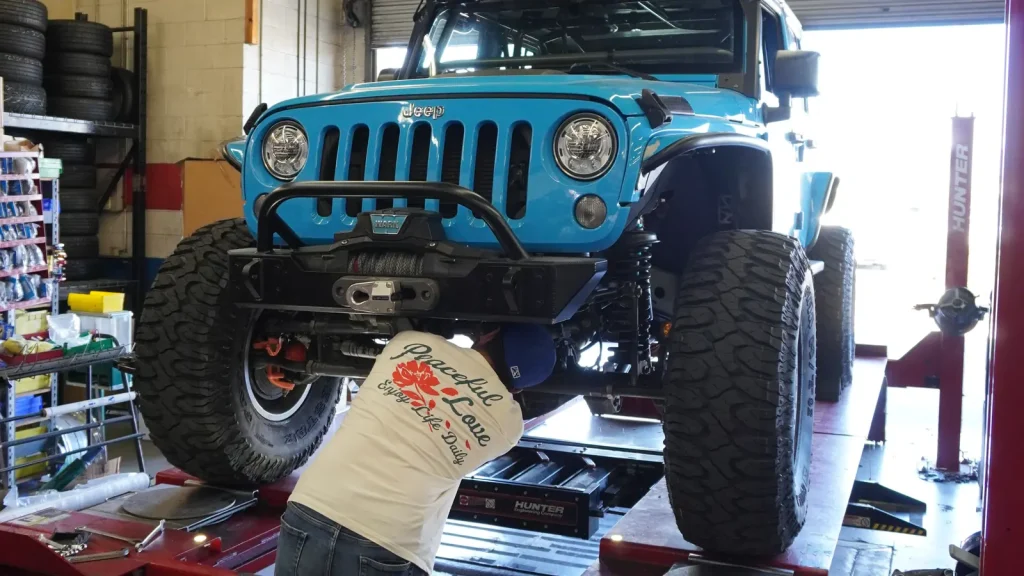
A Wheel Alignment is the process of adjusting the angles of your vehicle’s steering and suspension components back to original specifications. This means all the wheels are facing in the same direction.
An alignment is done using a special machine that measures the wheel angles against your vehicle’s original specifications. The technician then makes adjustments as needed.
- Toe refers to the angle of directional difference between the tire and the centerline of the vehicle. This is probably the most important adjustment when it comes to preventing uneven tire wear.
- Camber is the measure of the degree of perpendicular offset from the road surface.
- Caster is the angle of your wheel’s pivot, which is attached to the suspension, and when this angle is out of alignment, straight-line tracking is affected.
3 angles
Camber, caster and toe, set to factory specs.
Once a year
How often we recommend an alignment check.
Free inspection
A $75 value. No purchase required.
Signs you need a wheel alignment
These are the most common signs that your vehicle needs a wheel alignment.
Uneven tire wear
One edge of the tire wears faster than the other.
Steering wheel off-center
It sits tilted when you drive straight.
Pulling to one side
The vehicle drifts left or right on a straight road.
Worn steering or suspension part
A worn part usually throws the alignment out too.
Also have it checked after:
New tires
Suspension or steering work
An off-road trip
A pothole or curb
An accident
Why wheel alignment matters
A wheel alignment will keep your vehicle running safely and efficiently by promoting reduced tire wear, better gas mileage, and safer driving conditions. Wheels out of alignment will contribute to uneven tire wear. Uneven tread wear can be felt in a vehicle pulling to the right or left while in motion.
Left untreated, wheel alignment issues have the potential to turn into steering and suspension issues, since driving with wheels out of alignment not only puts stress on your tires but also on suspension components. This can have a major impact on your driving experience.
Benefits of a proper alignment
- Longer Tire Life
- Improved Vehicle Steering
- Improved Driving Experience (Smoother Ride)
- Improved Fuel Efficiency
- Fewer Auto Repairs
- Preserved Tire Warranty Coverage
Types Of Wheel Alignment
Four-wheel alignment
Adjusts all four wheels, usually the rear first and then the front. It is the manufacturer's recommendation for vehicles with adjustable rear suspension, which most vehicles with independent rear suspension have.
Two-wheel (thrust) alignment
Adjusts the front wheels only, also called a front-end alignment. Common on trucks with a solid rear axle and on base economy cars. We still measure all 4 wheels to catch a problem on the rear axle.
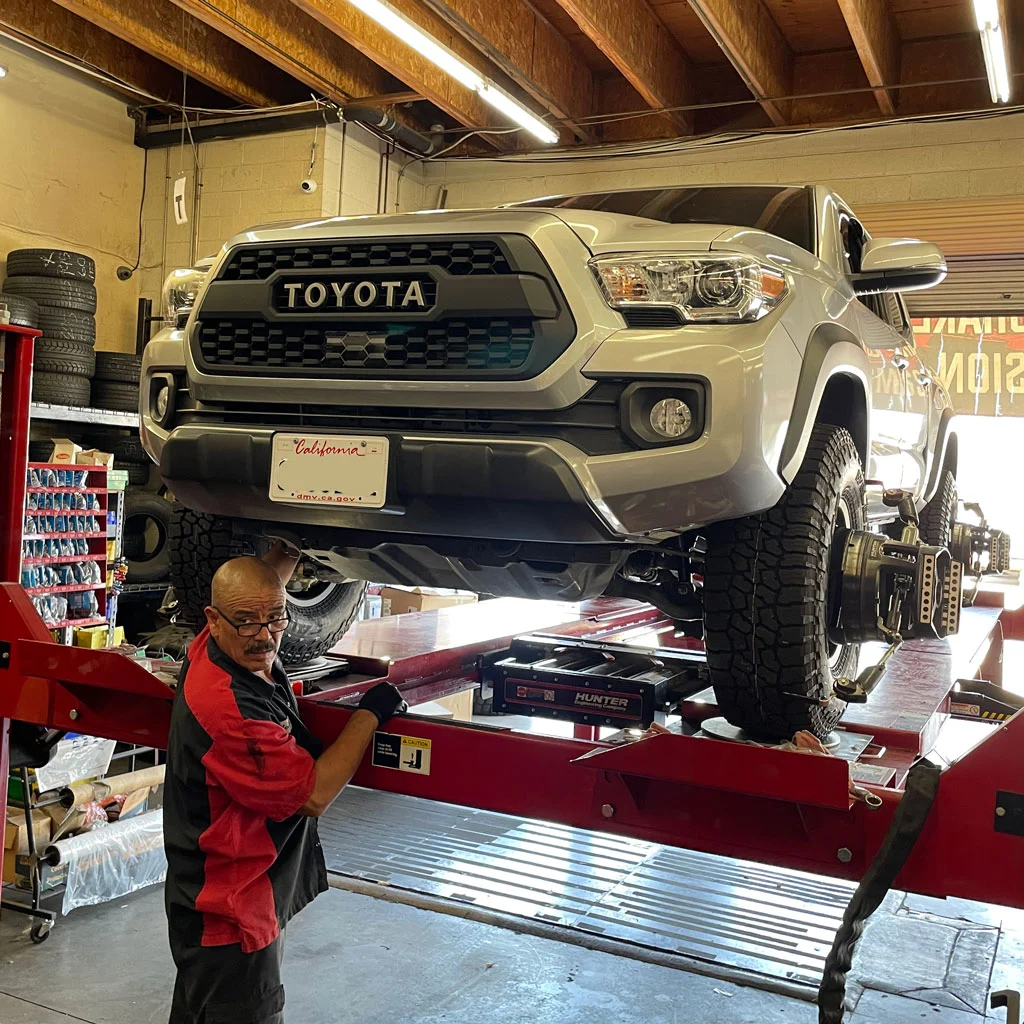
Our alignment equipment
Every alignment starts with a preliminary inspection and is done on Hunter equipment: the Hunter Hawkeye Elite aligner and a Hunter alignment rack with an 18,000 lb capacity, so we can align everything from everyday cars to lifted trucks and heavy-duty vans.
18,000
lb alignment rack capacity
Hunter
Hawkeye Elite aligner
4
wheels measured on every alignment
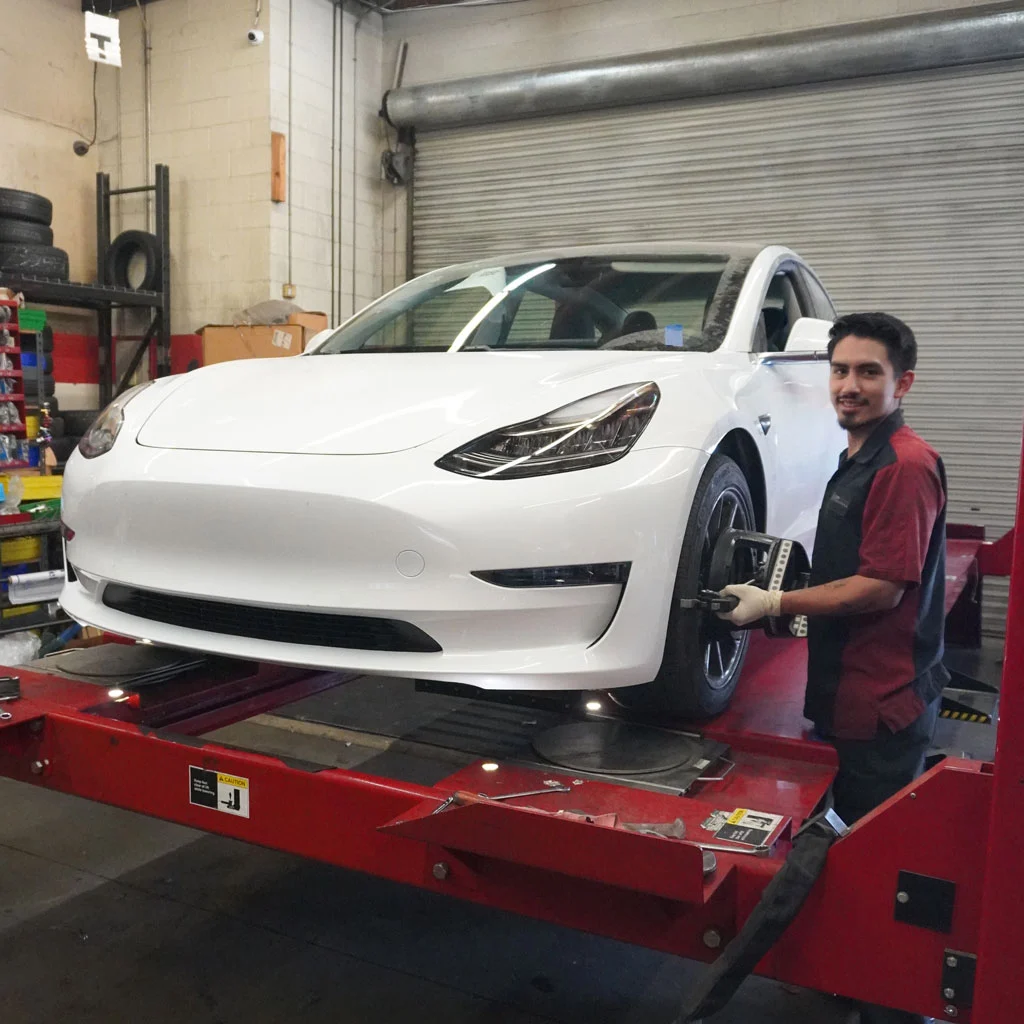
Vehicles we can align
We can align all of these, and more:
Everyday cars
Trucks
Lowered cars
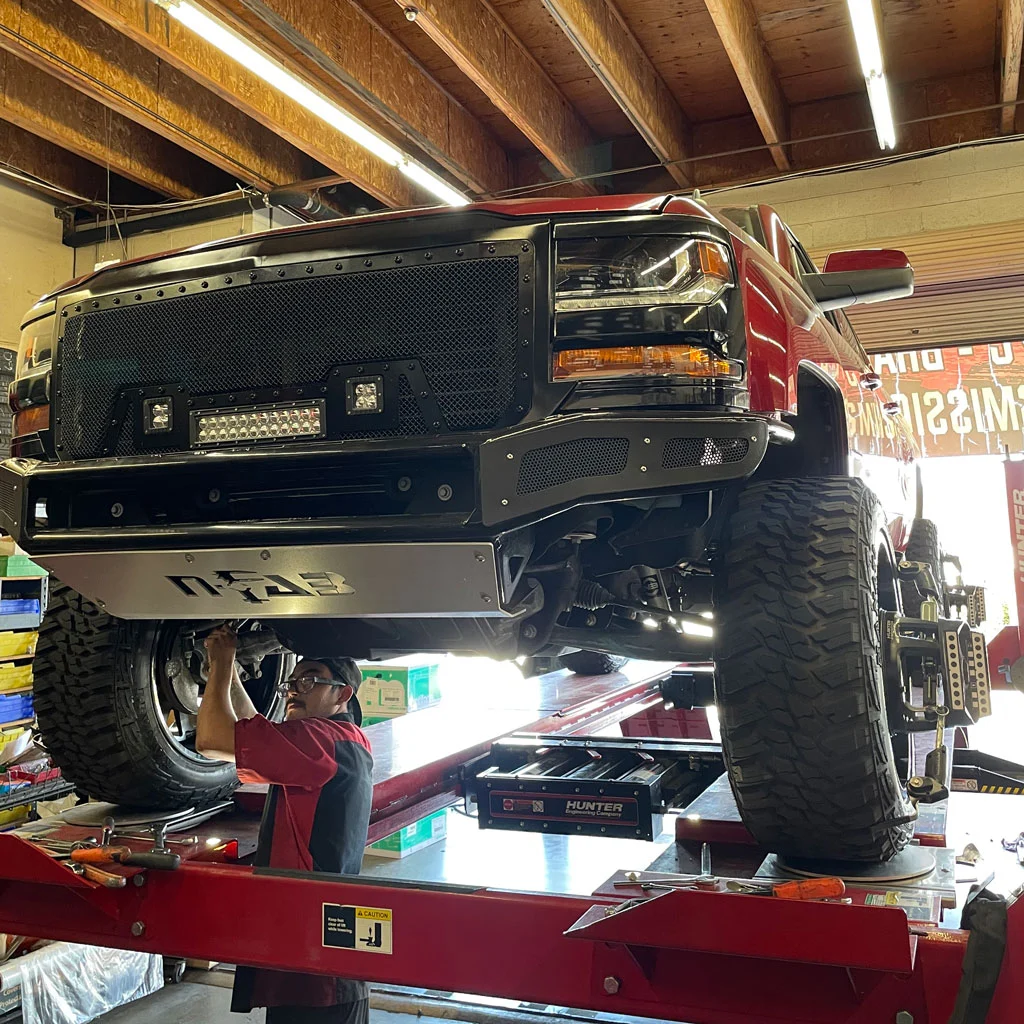
Lifted trucks
European (BMW, Mercedes, Audi, Volvo)
Tesla
Jeeps
Large vans (Sprinter, Transit, ProMaster)
Heavy duty (F-450, Silverado 3500, Ram 3500)
More alignment services
Need an alignment on a Tesla? It has its own page, with the models we align and the price.
Tesla wheel alignment
Model 3, Model Y, Model S and Model X, lowered ones too.
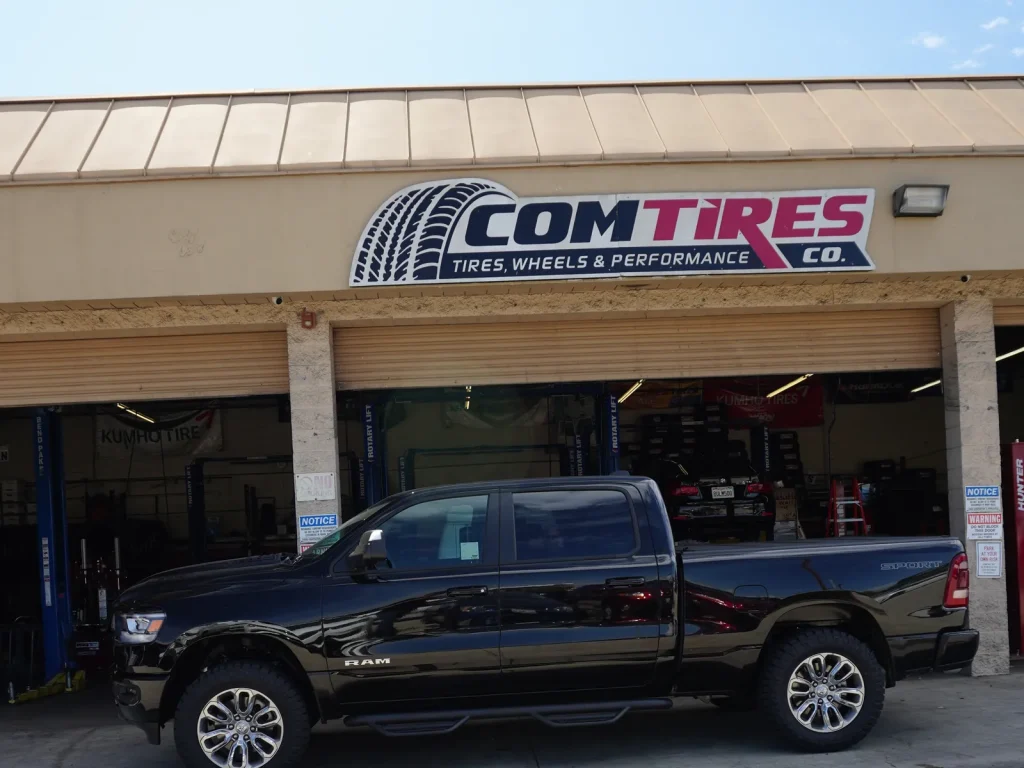
Wheel alignment in Ontario, CA
Comtires
1113 W Holt Blvd, Ste B1
Ontario, CA 91762
Near Holt Blvd and Mountain Ave
Monday-Friday: 8:00 AM - 5:30 PM
Saturday-Sunday: Closed
Every alignment is done at our auto repair shop in Ontario, where we have served drivers since 2011.
Customers come to us from across the Inland Empire, including Chino, Chino Hills, Eastvale, Fontana, Montclair, Pomona, Rancho Cucamonga and Upland. Whether you drive an everyday commuter car or a lifted truck, you can book your alignment online or call us to set a time.
Wheel Alignment FAQ
How do I know if my car needs a wheel alignment?
The most common signs are uneven tire wear, with one edge wearing faster than the other, a steering wheel that sits off-center when you drive straight, and a vehicle that pulls to one side. A worn steering or suspension part usually throws the alignment out too, so we check those as well.
How often should I get a wheel alignment?
We recommend checking your alignment once a year. Check it sooner after installing new tires, after steering or suspension work, after hitting a pothole or curb, after an accident or an off-road trip, or whenever the steering wheel looks uneven or the vehicle pulls.
What is the difference between a four-wheel and a two-wheel alignment?
A four-wheel alignment adjusts all four wheels and is the manufacturer's recommendation for vehicles with adjustable rear suspension. A two-wheel, or thrust, alignment adjusts only the front wheels and is common on trucks with a solid rear axle. Either way, we measure all four wheels to catch a problem on the rear axle.
Can you align lifted trucks, lowered cars and heavy-duty vans?
Yes. Besides everyday cars, we align lifted trucks, lowered cars, Jeeps, Teslas, European vehicles, oversized vans like the Sprinter, Transit and ProMaster, and heavy-duty trucks such as the Ford F-450 and Ram 3500. Our Hunter alignment rack is rated for 18,000 lbs.
Do I need an alignment after buying new tires?
It is a good idea. A vehicle that is out of alignment wears new tires unevenly from the first mile, which shortens their life and can affect your tire warranty coverage. Checking the alignment when the tires go on protects that investment and keeps the vehicle tracking straight.