
What is brake repair?
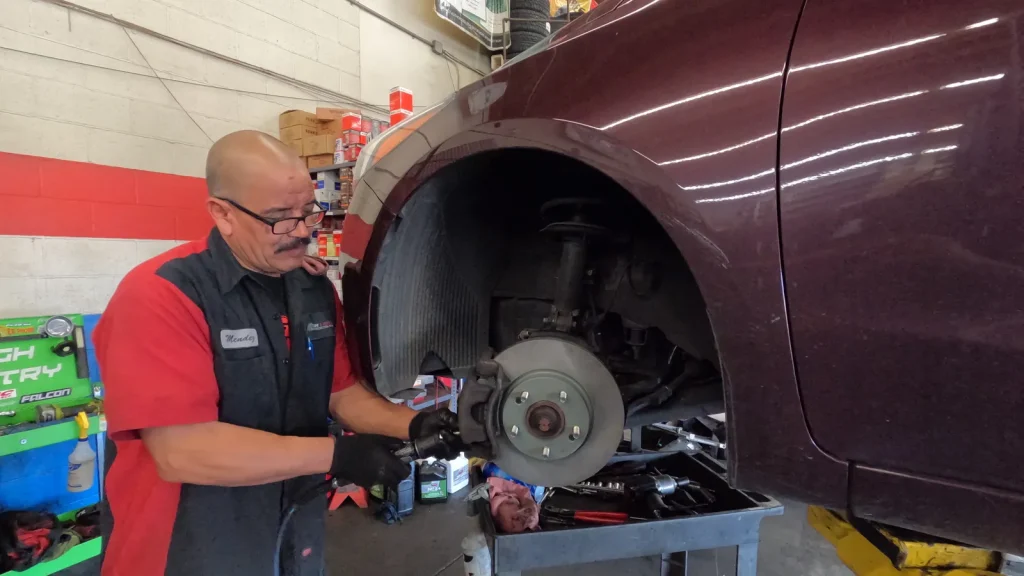
Brake repair restores the parts that bring your vehicle to a safe stop: the brake pads or shoes, the rotors or drums, the calipers and the brake fluid. These parts wear down with use and, over time, need professional attention.
It can be as simple as new pads, or include resurfacing the rotors, servicing the calipers and flushing the brake fluid. A brake inspection shows which your vehicle needs.
Pads, rotors, calipers, fluid
The whole system, checked and serviced.
Stop with confidence
Peace of mind every time you brake.
Free inspection
Multi-point, a $75 value. No purchase required.
Signs your brakes need attention
These are the most common warning signs of a brake problem, and what usually causes them.
Squealing when you brake
Usually worn pads that need replacing.
Grinding
Pads worn through, with metal on the rotors.
Pulsating pedal
Often a warped rotor.
Soft or spongy pedal
A brake fluid problem or a leak.
Also have them checked if you notice:
A hard, stiff pedal
The brake warning light
Longer stopping distances
Why brake repairs should not wait
Brakes are your first line of defense, for you and for everyone else on the road. A soft pedal or a longer stopping distance means less braking power exactly when you need it.
Waiting also costs more. Pads left past the squeal wear down to metal and damage the rotors, so a pad replacement becomes a rotor job too. Addressing small issues early avoids more extensive, costlier repairs.
Benefits of timely brake service
- Shorter, more confident stops
- Rotors protected from worn-out pads
- Smaller repairs, caught early
- Safer driving for you and others
- A longer life for your vehicle
Disc brakes or drum brakes?
The parts that wear are different in each system, and we service both.
Disc brakes
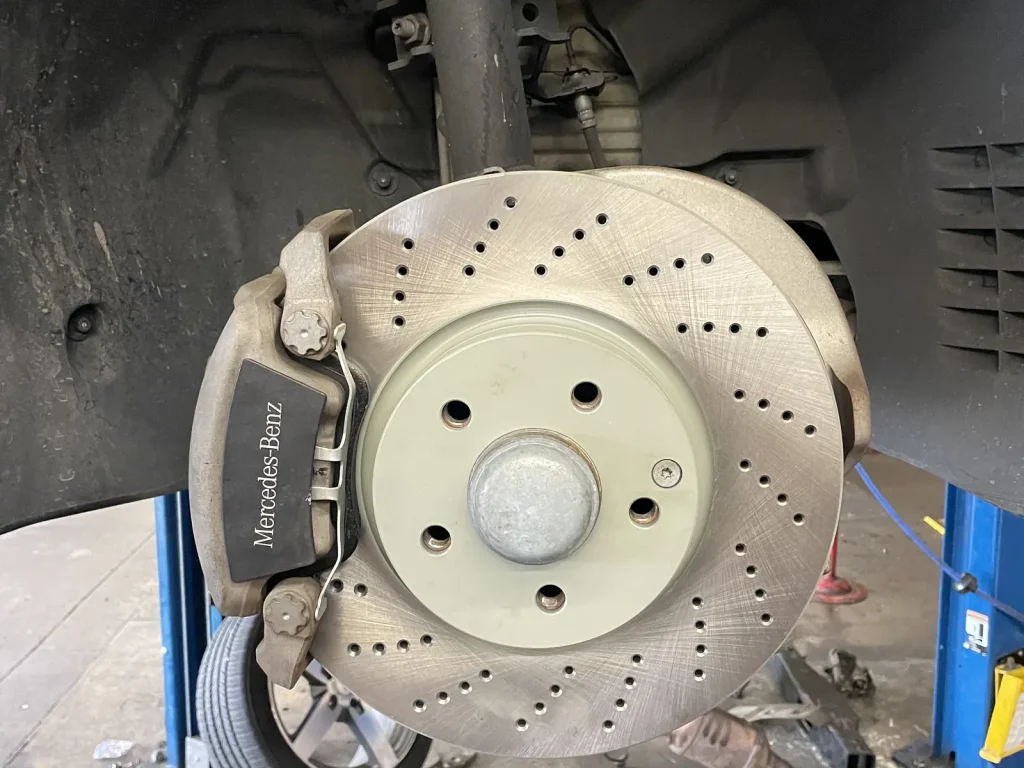
Brake pads clamp down on a disc, the rotor, to slow the wheel. Worn pads are replaced; the rotors are resurfaced while they are above their minimum thickness and replaced when they are not.
Drum brakes
Crescent-shaped brake shoes sit inside a drum. When you press the pedal, they push outward against the drum to slow the wheel. Worn shoes are replaced, just like pads.
Our brake services
Every brake job starts with a thorough inspection. Our technicians check the pads for wear, measure the rotor thickness, examine the calipers, brake lines, master cylinder and ABS components, scan the ABS for trouble codes, and check the brake fluid.
You get a complete estimate with every repair, and most repairs are backed by our 24-month / 24,000-mile warranty.
Brake inspection
The whole system, from pads to brake fluid.
Pad replacement
Old pads out, nearby parts checked, new pads in.
Shoe replacement
New shoes for drum brake systems.
Rotor resurfacing or replacement
A smooth, even surface for the pads.
Caliper service
Cleaned and lubricated, on its own or with a pad job.
Brake fluid flush
Old fluid out, fresh clean fluid in.
Brake repair in Ontario, CA
Comtires
1113 W Holt Blvd, Ste B1
Ontario, CA 91762
Near Holt Blvd and Mountain Ave
Monday-Friday: 8:00 AM - 5:30 PM
Saturday-Sunday: Closed
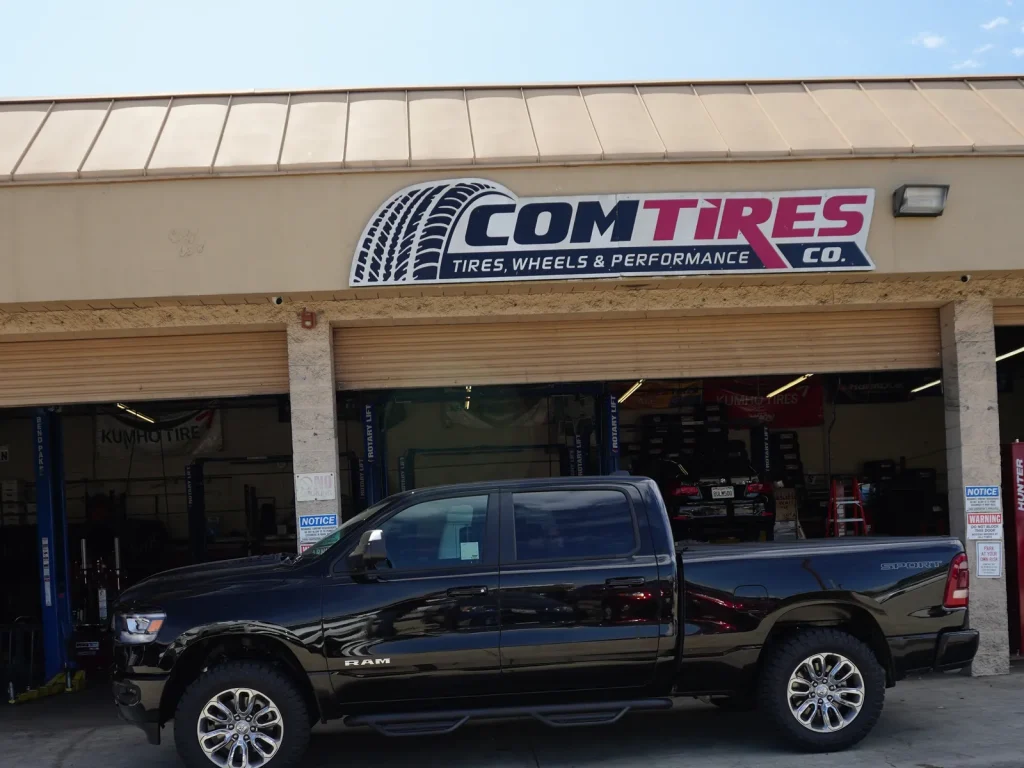
Every brake inspection and repair is done at our auto repair shop in Ontario, where we have served drivers since 2011, with service in English and Spanish.
Customers come to us from across the Inland Empire, including Chino, Chino Hills, Eastvale, Fontana, Montclair, Pomona, Rancho Cucamonga and Upland. Hear squealing or grinding? Book online or call us to set a time.
Brake Repair FAQ
How do I know if I need new brake pads?
A high-pitched squeal when you brake usually means the pads are worn and due for replacement. A grinding noise means they are worn through and metal is contacting the rotors, which damages them. Replacing the pads when they start to squeal keeps a simple job from turning into a rotor repair.
Why does my brake pedal feel soft or spongy?
A soft or spongy pedal that takes more effort usually points to a problem with the brake fluid or a leak in the braking system. It reduces braking power, so have it inspected right away. A pedal that feels hard or stiff instead often points to the brake booster.
How often should my brakes be inspected?
Follow your vehicle manufacturer's recommended intervals for brake inspections and service. Between them, have the brakes checked whenever you hear squealing or grinding, feel the pedal pulse or go soft, see the brake warning light, or notice the vehicle taking longer to stop.
Do my rotors need to be replaced?
Not always. When a rotor is still above its minimum thickness, it can be resurfaced: a thin layer is removed to create a smooth, even surface for the pads. Below that thickness, or when it is badly damaged, it has to be replaced. We measure the rotor thickness during the brake inspection, which tells us which one your vehicle needs.
What does a brake fluid flush do?
Brake fluid transfers the force from your brake pedal to the brakes. Over time it becomes contaminated or degrades, which affects braking performance. A flush removes the old fluid and replaces it with fresh, clean fluid. We check the brake fluid as part of every brake inspection.