Do Wheels Really Affect Fuel Efficiency?
Yes. The question most drivers actually have is how much, and that’s where honest answers get harder.
Wheels influence fuel economy through four channels: how much the rotating assembly weighs, how much friction the tire generates as it rolls, how tall the whole package stands, and how much air the vehicle pushes aside. None of them produce a fixed penalty you can look up in a chart.
Here’s what surprises people: the rim is rarely the main character. The tire wrapped around it — its width, tread pattern, rubber compound and inflation pressure — usually has more to say about your mileage than the wheel’s diameter or finish. A half-ton truck on a freeway commute and a compact commuter car also respond differently to the same change. So treat any blanket number you see online with suspicion, and use what follows to predict the direction of the change for your vehicle.
Wheel Size: Why Bigger Rims Usually Cost Some MPG
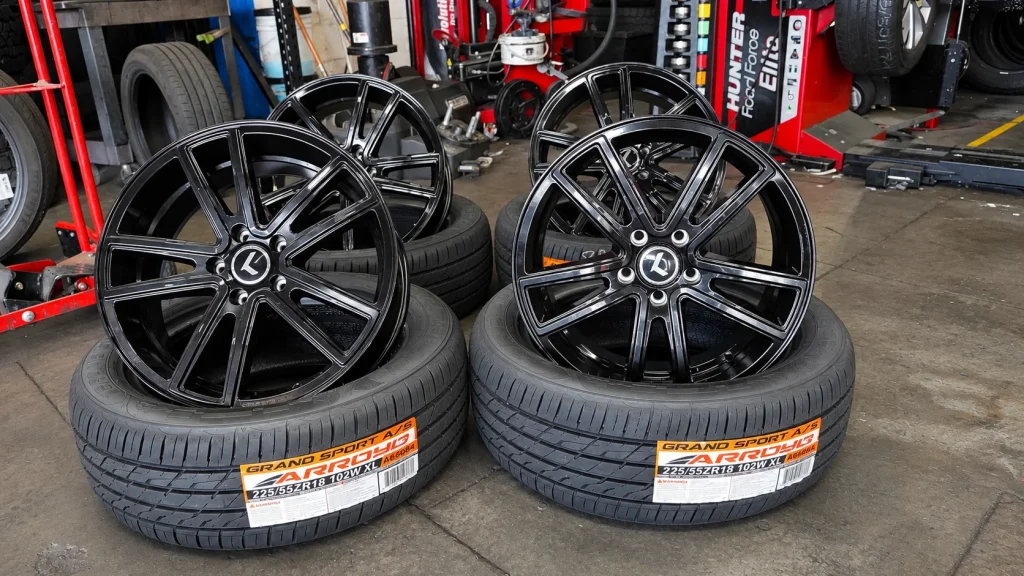
Plus-sizing is the standard way to upgrade: you go up in rim diameter and down in sidewall height, so the overall tire diameter stays close to factory. Done right, a 20-inch setup stands at nearly the same height as the 18-inch package it replaced.
Do bigger wheels lower gas mileage? Usually, modestly — but for indirect reasons. Larger wheel-and-tire packages tend to be heavier, and they’re often wider, since bigger rims are commonly paired with broader tires. More weight and more width both work against efficiency.
The relationship between wheel size and MPG gets messy when overall diameter changes. A taller package turns fewer revolutions per mile, which effectively changes your gearing. It also changes what your speedometer and odometer read, so your dashboard reports a distance that no longer matches the road you covered. That quietly distorts any tank-to-tank MPG math you do yourself — some drivers blame new wheels for a mileage drop that is partly a measurement error.
Wheel Weight and Rotational Mass
Does wheel weight affect fuel economy? Yes. Wheels are rotating mass: every time you accelerate, the engine has to spin each wheel and tire up to speed as well as push the vehicle forward, and braking throws that energy away. They’re also unsprung mass — weight below the springs that the suspension has to control over every bump.
Because the cost shows up during acceleration, it matters most in stop-and-go driving. If your commute means crawling along Holt Blvd or sitting in I-10 and SR-60 traffic, you pay it again and again. On a steady freeway cruise, it matters far less.
For scale, fueleconomy.gov notes that an extra 100 pounds can reduce MPG by about 1%, based on a 3,200-pound vehicle, with smaller vehicles affected more. That’s a whole-vehicle figure, not a wheel-specific one, but it shows why added weight at any corner isn’t free.
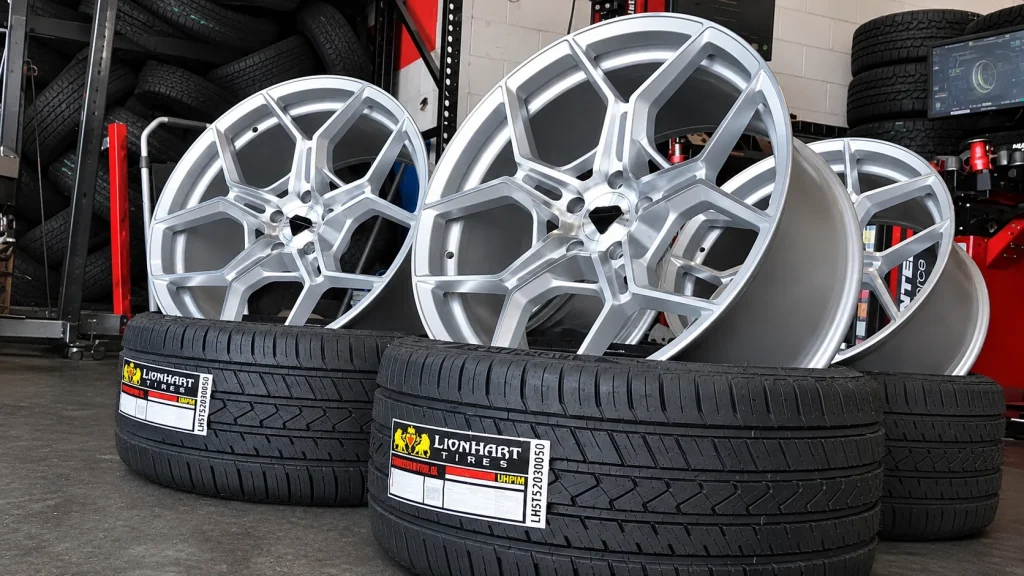
Material and construction — steel or aluminum, cast, flow-forged or forged — are what set a wheel’s weight. Two wheels of the same size and style can differ, so ask for the actual weight of the set you’re considering before you buy.
Tire Width, Sidewall and Rolling Resistance
What is rolling resistance in tires? It’s the energy a tire loses simply by rolling. Rubber flexes as it meets the road and springs back as it leaves, and that flexing turns fuel energy into heat.
The link between rolling resistance and fuel economy is well documented. NHTSA estimates that a 10% reduction in rolling resistance yields about a 1–2% improvement in fuel economy. NHTSA also notes that low-rolling-resistance tires commonly feature higher inflation pressure and reduced sidewall and tread deflection — in other words, a tire that flexes less. Compound and construction shift those results, so two tires in the identical size can behave very differently.
Do wider tires reduce gas mileage? Generally, yes: a wider tire puts more rubber on the pavement and more of it flexes every rotation. Aggressive tread adds to that. All-terrain and especially mud-terrain patterns use deep, blocky lugs that deform more than a highway tread. So does tire size affect gas mileage? Yes — through width, weight, diameter and tread, not the size number itself.
Lifted Trucks and Oversized Tires in the Inland Empire
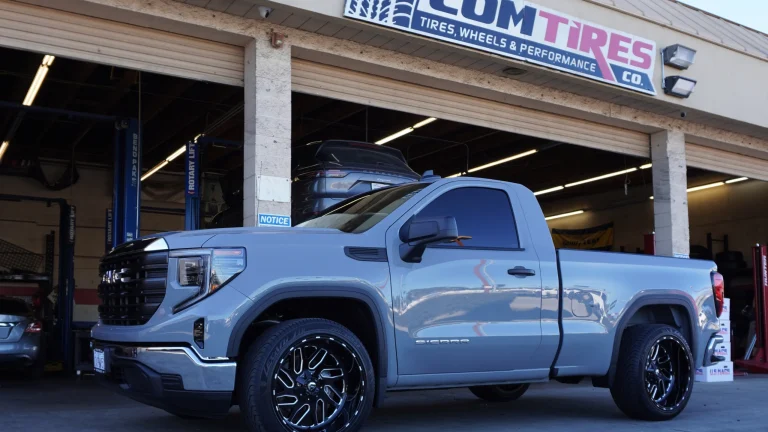
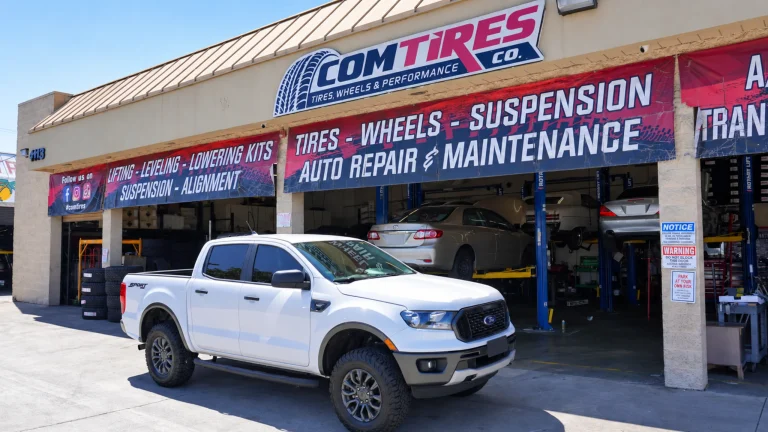
A lift or leveling kit with larger tires changes three things at once: more weight at each corner, a taller overall diameter that alters gearing and speedometer readings, and a raised body that pushes more air at freeway speeds.
That last one matters around here. A truck running the 60 between Ontario and Riverside every day pays the aerodynamic cost every mile. A truck that mostly sees city streets and the occasional weekend run to the desert or the mountains pays it far less often.
Match the tread to how you actually drive. If most of your miles are commute miles, a highway-biased all-terrain will treat you better at the pump than a mud-terrain you use twice a year. If you really do run dirt and rock regularly, buy the aggressive tire and accept the trade knowingly.
Tire Pressure: The Cheapest Fuel-Economy Fix
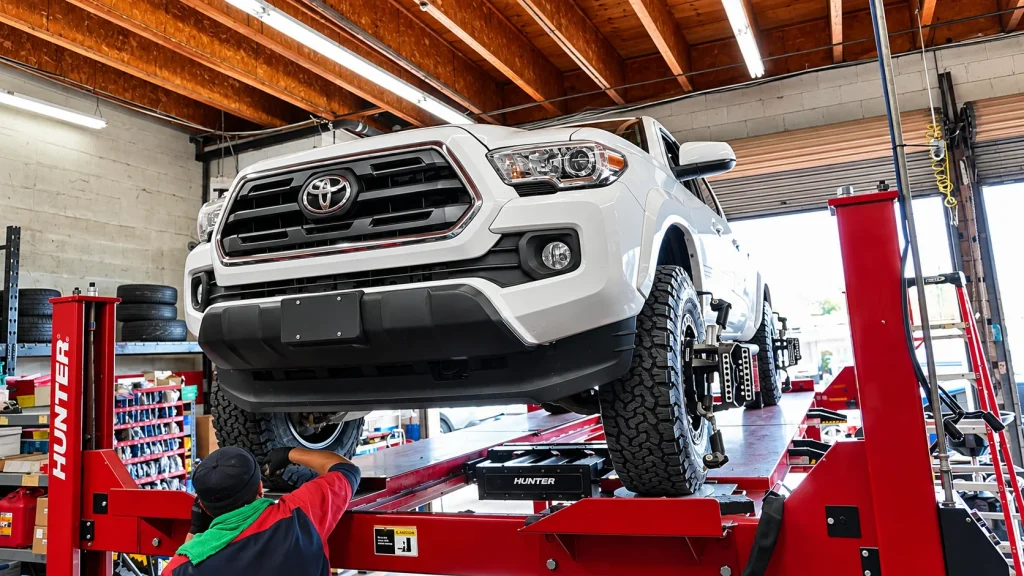
Before you spend anything on wheels, check your air. According to fueleconomy.gov, keeping tires properly inflated improves gas mileage by about 0.6% on average, and by up to 3% in some cases, while mileage drops about 0.2% for every 1 psi drop in the average pressure of all tires.
Use the right target. NHTSA is clear that the correct pressure is the vehicle manufacturer’s figure on the Tire and Loading Information placard — usually on the driver’s door jamb — not the maximum molded into the sidewall. NHTSA also recommends checking monthly, when the tires are cold.
One warning for plus-sized setups: a low-profile tire has so little sidewall that it can look normal while running low. Your eyes aren’t a gauge — use a real one.
How to Choose a Fuel-Smart Wheel and Tire Setup
Keep overall diameter close to stock to protect gearing, speedometer accuracy and your own MPG math.
Favor lighter wheels and ask for the actual weight, not just the style name.
Pick tread for your real driving — highway tread for commute miles.
Ask about low-rolling-resistance options in the size you want.
Set pressure to the placard figure and check it monthly.
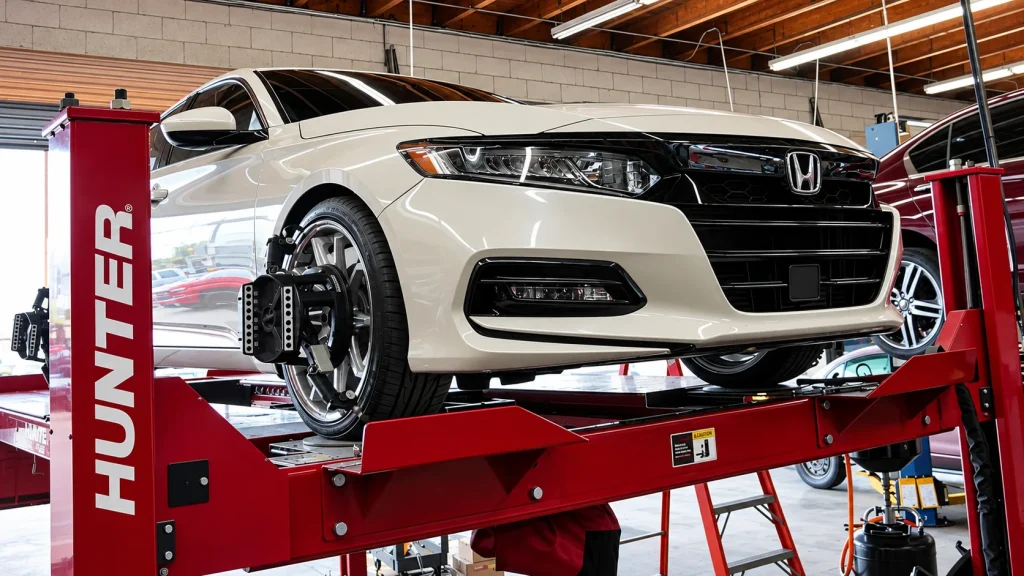
Alignment belongs on the list too — we cover it in how alignment affects tire life and fuel economy. And if the numbers on a sidewall still look like a code, our ultimate guide to tires explains how to read them.
Get Your Wheel and Tire Setup Checked at Comtires
The surest way to know what a setup will do to your mileage is to have someone look at your vehicle. Start with the Comtires wheel configurator to see what fits your car, truck or SUV, then talk through diameter, width and weight with a technician before you order. We can also check an existing setup’s fitment and set your pressures to the placard spec.
Call (909) 391-4276 or stop by 1113 W Holt Blvd, Ste B1, Ontario, CA 91762, Monday through Friday, 8:00 AM to 5:30 PM. Bring the vehicle and the wheels you’re considering — specifics beat guesswork.