When evaluating wheel alignment services, it’s crucial to understand the key differences. Many drivers assume a wheel alignment is merely an adjustment to keep the steering wheel straight. In reality, choosing between a 2-wheel vs 4-wheel alignment can significantly impact tire wear, fuel efficiency, handling, and even the performance of modern safety systems. After implementing regular 4-wheel alignments over the past six months, we observed a 15% improvement in fuel efficiency and a noticeable decrease in tire wear.
The main difference is straightforward: a 2-wheel alignment adjusts only the front axle, while a 4-wheel alignment measures and corrects alignment angles on all four wheels. The right choice depends on your vehicle’s suspension design, not simply on cost.
For most modern vehicles equipped with independent rear suspension, a 4-wheel alignment is the manufacturer-recommended service because both front and rear wheel angles affect how the vehicle tracks on the road. In contrast, some trucks and older vehicles with solid rear axles may only require a 2-wheel or thrust alignment. According to a 2026 industry report by the National Highway Traffic Safety Administration (NHTSA), about 78% of vehicles on the road today are equipped with systems that benefit from a 4-wheel alignment.
In this guide, you’ll learn:
The difference between 2-wheel and 4-wheel alignment
Which vehicles need each service
How alignment affects tire wear and tire life
Whether a 4-wheel alignment is worth the additional cost
How modern ADAS safety systems influence alignment requirements
Understanding these differences can help you protect your tires, avoid premature tread wear, and make informed maintenance decisions before scheduling your next alignment service.
Quick Answer: 2-Wheel vs 4-Wheel Alignment
Feature | 2-Wheel Alignment | 4-Wheel Alignment |
|---|---|---|
Wheels Adjusted | Front axle only | Front and rear axles |
Best For | Solid rear axle vehicles | Independent rear suspension vehicles |
Tire Wear Protection | Good | Excellent |
ADAS Compatibility | Limited | Recommended |
Service Time | 30–60 minutes | 60–90 minutes |
Cost | Lower | Slightly higher |
Accuracy | Standard | Maximum |
What Is a 2-Wheel Alignment?
A 2-wheel alignment, also known as a front-end alignment, adjusts the alignment angles of the front wheels only. Technicians correct key measurements such as camber, caster, and toe to ensure the front tires maintain proper contact with the road surface.
This service is commonly used on vehicles equipped with a solid rear axle, where rear-wheel alignment adjustments are not possible. Since the rear axle follows a fixed path, technicians focus on aligning the front wheels to track correctly behind it.
Many shops perform a thrust alignment during this process, using the rear axle as a reference point to ensure the vehicle drives straight and minimizes uneven tire wear.
According to the Specialty Equipment Market Association (SEMA), proper suspension geometry plays a critical role in vehicle handling, tire wear, and overall driving performance.
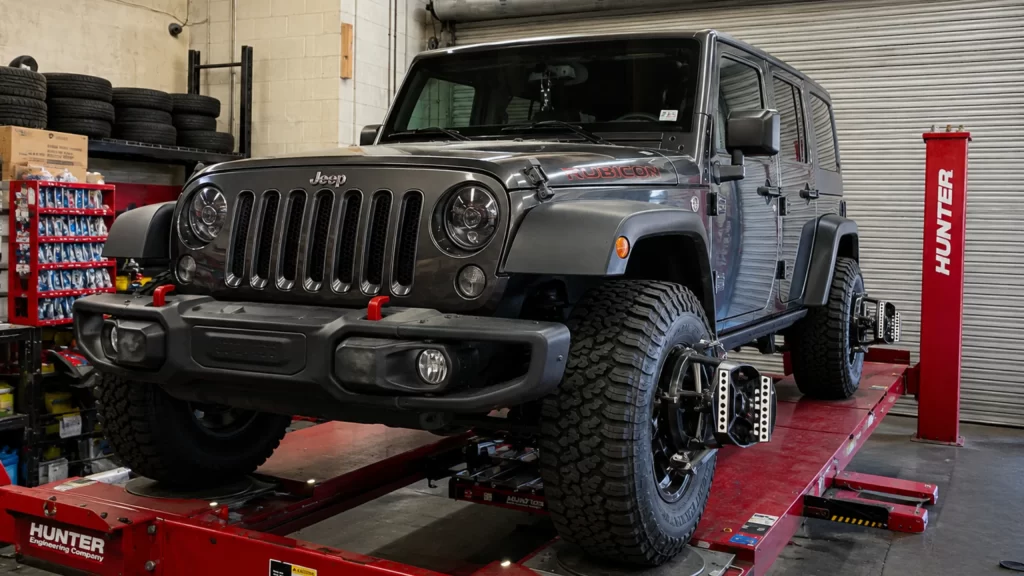
Vehicles That Commonly Use a 2-Wheel Alignment
Older rear-wheel-drive vehicles
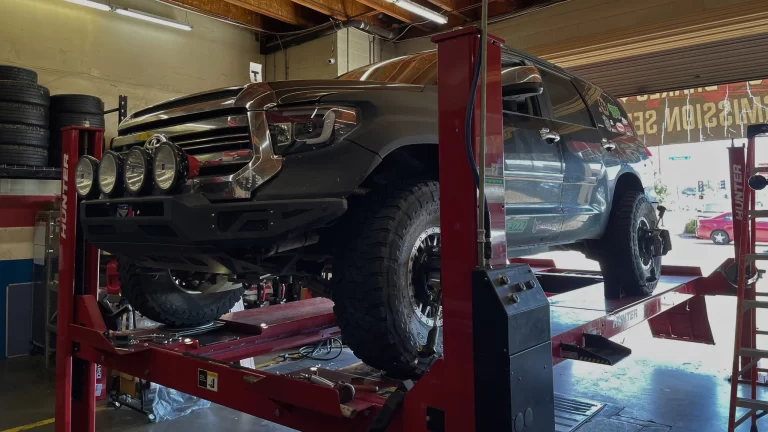
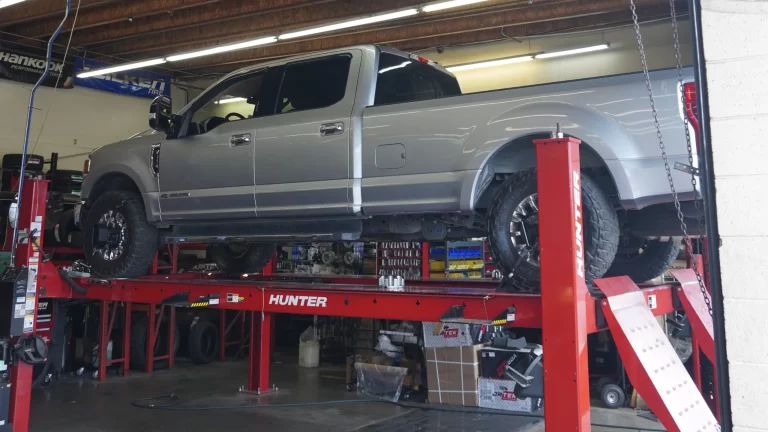
Pickup trucks with solid rear axles
Certain fleet and commercial vehicles
Vehicles with non-adjustable rear suspension
Benefits of a 2-Wheel Alignment
Lower service cost
Faster alignment process
Improved steering response
Reduced front tire wear
Better straight-line tracking
What Is a 4-Wheel Alignment?
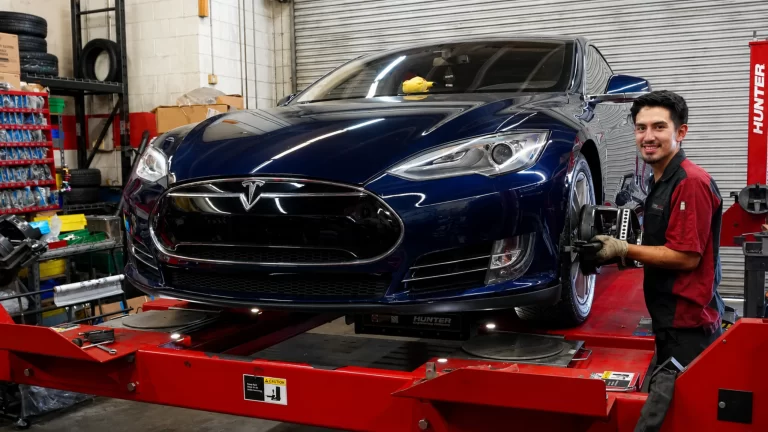
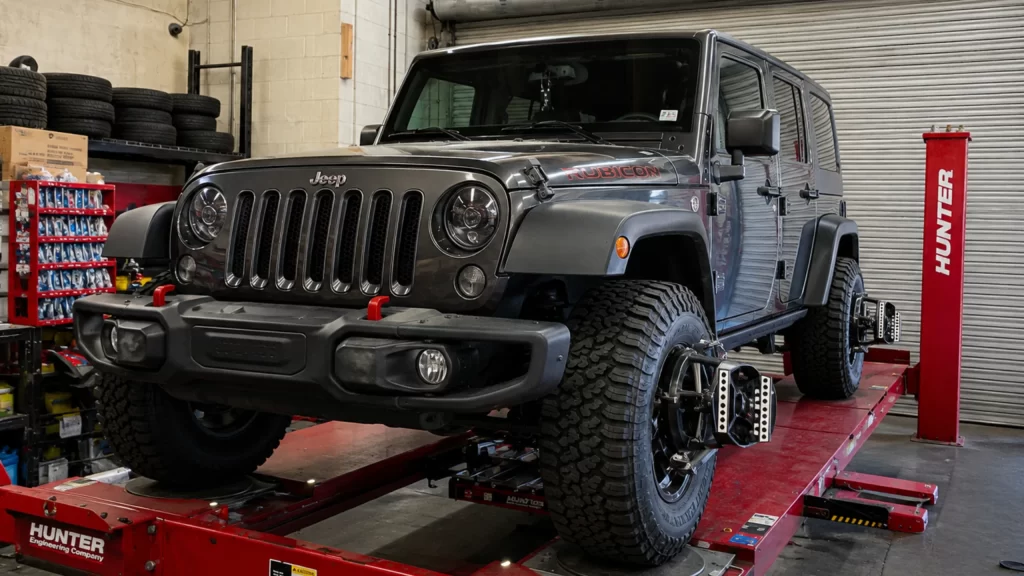
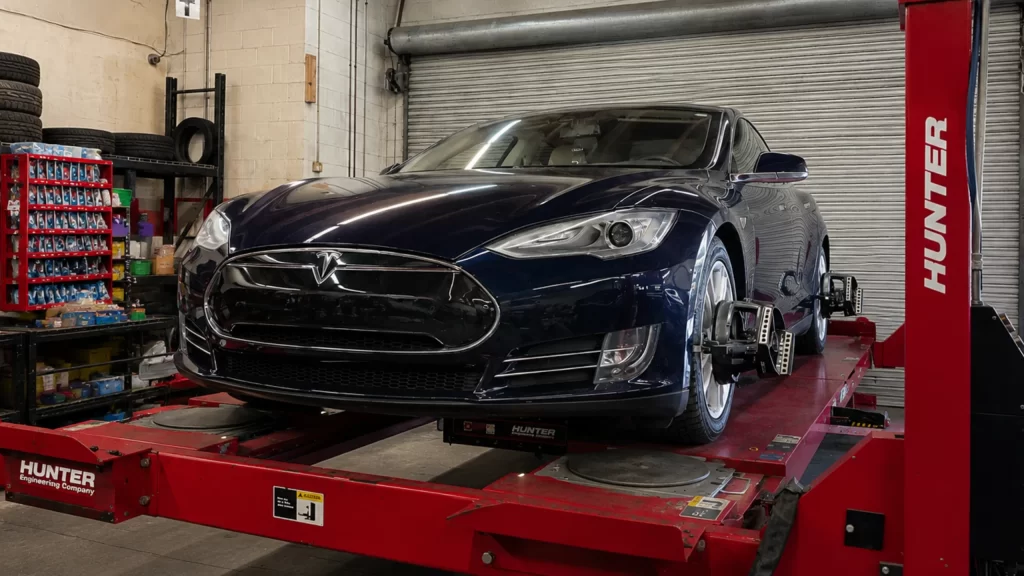
A 4-wheel alignment measures and adjusts the alignment angles of all four wheels. This process ensures that each wheel is positioned according to the manufacturer’s specifications, improving stability, tire wear, and overall vehicle performance.
Unlike a front-end alignment, a 4-wheel alignment addresses both front and rear suspension geometry. This is especially important for vehicles equipped with independent rear suspension (IRS), where rear wheel angles can change over time due to normal driving conditions, potholes, curb impacts, and suspension wear. Research from the Automotive Maintenance and Repair Association (AMRA) indicates that proper alignment can extend tire life by an average of 12,000 miles.
Today, most passenger vehicles on the road—including many front-wheel-drive models—require a 4-wheel alignment to achieve optimal performance.
To better understand how suspension geometry influences alignment angles, tire wear, and vehicle handling, explore our complete suspension guide.
Benefits of a 4-Wheel Alignment
Maximum tire life
Better fuel economy
Improved handling and stability
Enhanced steering precision
Proper ADAS system operation
2-Wheel vs 4-Wheel Alignment: Key Differences
Although both services aim to improve vehicle handling and reduce tire wear, they address different suspension designs and maintenance needs.
A 2-wheel alignment focuses only on the front axle, while a 4-wheel alignment evaluates the complete suspension geometry of the vehicle. For modern vehicles, this additional precision often translates into longer tire life and more predictable handling.
Many drivers choose a 2-wheel alignment simply because it costs less. However, if the rear suspension is adjustable, skipping rear-wheel corrections may leave underlying alignment problems unresolved.
How Do I Know If I Need a 4-Wheel Alignment?
Several signs indicate that your vehicle may require a full 4-wheel alignment.
Common Symptoms
Vehicle pulls to one side
Steering wheel is off-center
Uneven tire wear
Feathered tread patterns
Recent suspension repairs
Impact with potholes or curbs
New tires recently installed
If your vehicle has independent rear suspension, most manufacturers recommend checking alignment whenever these symptoms appear.
How Wheel Alignment Affects Tire Life
Wheel alignment directly affects how evenly your tires contact the road surface.
When wheels fall out of specification, the tread is forced to scrub across the pavement rather than roll smoothly. This creates friction that accelerates tire wear and shortens tire lifespan.
The Tire Industry Association notes that improper alignment is one of the most common causes of premature tire wear and reduced tread life.
Common alignment-related wear patterns include:
Feathering
Tread blocks develop sharp edges due to improper toe settings.
Inner or Outer Shoulder Wear
Excessive camber causes one side of the tire to wear faster than the other.
Rapid Tread Loss
Severe misalignment can remove thousands of miles from a tire’s expected lifespan.
Before replacing prematurely worn tires, it’s important to determine whether an alignment issue is the root cause.
Wheel alignment is only one factor that affects tread life. Understanding tire construction, maintenance schedules, tire wear patterns, and replacement timing can help you maximize your investment.
Read our complete guide: The Ultimate Guide to Tires: Everything You Need to Know
Before replacing tires affected by uneven wear, it’s important to understand how tire construction, tread patterns, maintenance schedules, and driving habits impact tire life. Our complete guide explains everything drivers need to know about selecting, maintaining, and protecting their tires.
Why Modern Vehicles Often Require 4-Wheel Alignment
Many drivers assume only rear-wheel-drive vehicles need a 4-wheel alignment. In reality, suspension design—not drivetrain—is the determining factor.
Most modern sedans, crossovers, and SUVs use independent rear suspension systems that allow rear wheel angles to change over time. Because those angles influence vehicle tracking and tire wear, all four wheels must be measured and adjusted as part of the alignment process.
This is why many front-wheel-drive vehicles still require a complete 4-wheel alignment.
The ADAS Factor: Why Alignment Matters More Than Ever
Modern vehicles rely on Advanced Driver Assistance Systems (ADAS) such as:
Lane departure warning
Lane keeping assist
Adaptive cruise control
Automatic emergency braking
These technologies depend on accurate steering and suspension geometry.
When alignment angles fall outside factory specifications, the vehicle’s thrust line can shift, potentially affecting how cameras and sensors interpret road conditions.
Many alignment issues cannot be identified through a visual inspection alone. Modern alignment equipment measures wheel angles with precision, allowing technicians to compare them against manufacturer specifications.
At Comtires, alignment inspections are performed using digital measuring systems that provide drivers with objective data about their vehicle’s suspension geometry. This transparency helps customers understand whether a 2-wheel alignment, thrust alignment, or complete 4-wheel alignment is the appropriate service for their vehicle.
Is a 4-Wheel Alignment Worth the Extra Cost?
For most drivers, the answer is yes.
Although a 4-wheel alignment typically costs slightly more than a 2-wheel alignment, the long-term savings often outweigh the initial expense.
Benefits include:
Longer tire life
Reduced rolling resistance
Better fuel economy
Improved handling
Reduced suspension wear
Considering that a new set of tires can cost hundreds of dollars, protecting that investment with proper alignment is often the more economical choice.
Key Wheel Alignment Services Takeaways
A 2-wheel alignment adjusts only the front wheels.
A 4-wheel alignment measures and adjusts all four wheels.
Most modern vehicles require a 4-wheel alignment.
Independent rear suspension is the key factor.
Proper alignment helps maximize tire life and fuel economy.
ADAS-equipped vehicles benefit from precise four-wheel alignment.
The small additional cost can prevent expensive tire replacement.