A bad alternator can cause dim headlights, battery problems, warning lights, and even engine stalling while driving. Because the alternator powers your vehicle’s electrical system and charges the battery, a failing alternator can quickly leave you stranded.
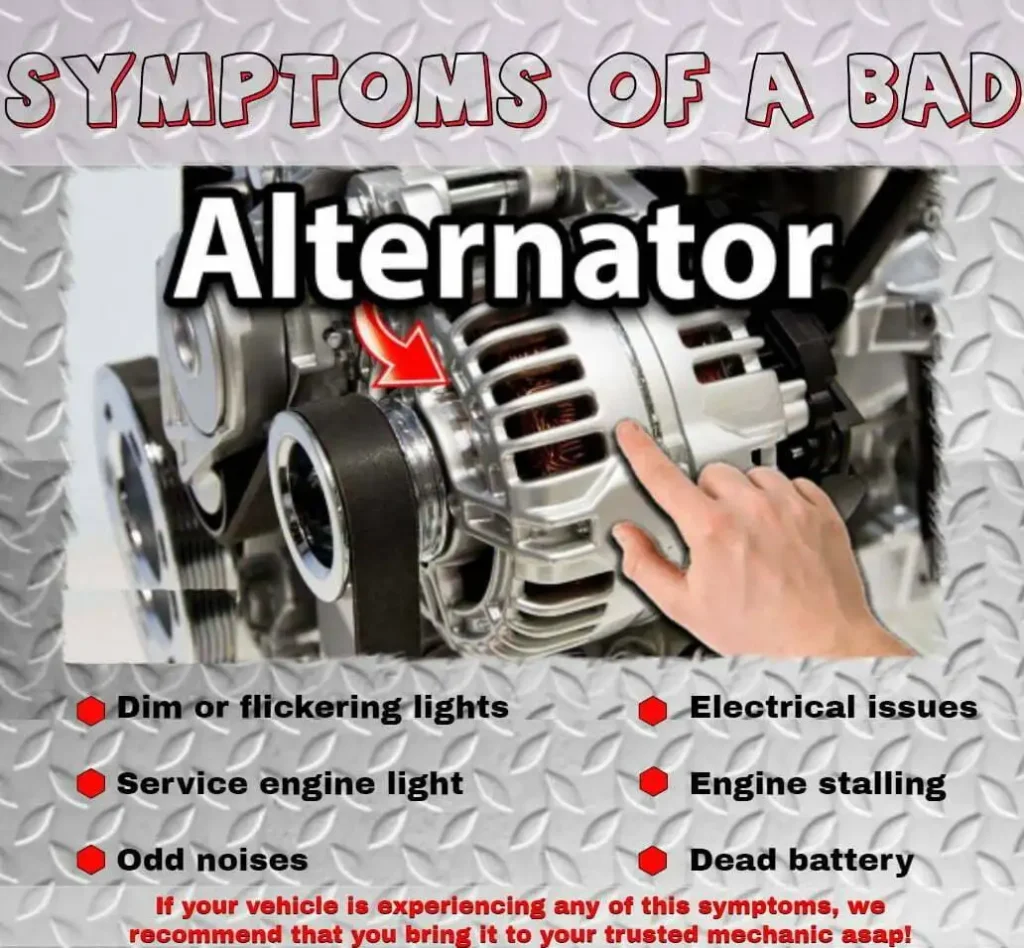
Common bad alternator symptoms include dim lights, repeated dead batteries, trouble starting the vehicle, electrical issues, and unusual noises from the engine bay.
Common Symptoms of a Bad Alternator
Dim Headlights and Dashboard Lights
One of the most common signs of a bad alternator is dim or flickering lights. When the alternator is not charging properly, your vehicle may not receive enough electrical power.
Dead Battery or Repeated Jump Starts
A failing alternator may not recharge the battery while driving, causing the battery to repeatedly lose power.
If your vehicle frequently needs jump starts, the alternator could be the problem.
Trouble Starting the Vehicle
A weak charging system can leave the battery discharged, making the engine hard to start or preventing it from starting altogether.
Engine Stalls While Driving
If the alternator stops working completely, the battery will eventually run out of power and the engine may stall while driving.
Grinding or Whining Noises
Bad alternator bearings can create whining, grinding, or high-pitched noises that change with engine RPM.
Can a Bad Alternator Drain a Battery?
Yes. A failing alternator may not properly recharge the battery, causing the battery to go dead repeatedly.
Bad Alternator vs Bad Battery
A bad battery usually causes starting problems, while a bad alternator often causes:
- dim lights,
- electrical issues,
- dead batteries,
- and stalling while driving.
Can You Drive With a Bad Alternator?
Driving with a bad alternator is risky because the battery will eventually lose power and the vehicle may stall unexpectedly.
If you suspect alternator problems, the vehicle should be inspected as soon as possible.
Conclusion
A failing alternator can lead to serious electrical and drivability problems if ignored.
If you notice dim lights, repeated dead batteries, or unusual noises, have your charging system inspected before the problem gets worse.
FAQs
What are the symptoms of a bad alternator?
Common symptoms include dim headlights, dead batteries, electrical problems, trouble starting the vehicle, and engine stalling.
Can a bad alternator drain a battery?
Yes. A failing alternator may not recharge the battery properly, causing repeated battery failure.
What noise does a bad alternator make?
A bad alternator may create whining, grinding, or high-pitched noises from the engine bay.