One hard hit on a sunken patch of the I-10, one tight parking move against a curb on Holt Blvd, and your car can start behaving differently on the way home. The steering wheel buzzes at freeway speed. The tire pressure light comes back a few days after you filled it. Nothing looks broken when you walk around the car.
NHTSA says a tire can suddenly lose pressure if you drive over a pothole or bump into a curb when you park. That same impact can also push the wheel itself out of shape, and that part is much harder to see.
Here is a plain checklist of bent rim symptoms and other signs of wheel damage: what they feel and look like, and which ones mean it is time for an inspection.
Why Wheel Damage Is Easy to Miss
Most drivers check the face of the wheel, the side you see from the sidewalk. Damage often sits somewhere else: on the inner lip or inner barrel, tucked behind the tire and facing the suspension. You need to turn the steering to full lock and put a flashlight on it to see anything at all. On vehicles with hubcaps or wheel covers, the wheel underneath is hidden completely.
The symptoms are just as easy to overlook. A slightly bent wheel can feel normal around town and only show up at freeway speed. A slow leak from a damaged rim can take days to trigger a warning. By the time something is obvious, you may have already put a lot of freeway miles on it.
6 Signs Your Wheels Are Damaged
You may notice only one of these. Any of them is worth a professional look, especially if the car felt fine before a pothole or curb hit and different after it.
1. Vibration at Highway Speeds
Wheel vibration at highway speeds is one of the first things drivers notice after a road impact, and one of the easiest to talk yourself out of. It may appear in a certain speed range and fade above it, which makes it easy to dismiss as “just the road.”
When you describe it to a technician, the first question is usually where you feel it. A vibration felt mainly in the steering wheel typically points the inspection toward a front wheel. One felt in the seat or through the floor points toward the rear. That is a starting point for diagnosis, not a guarantee, but it tells the shop which corner to check first.
A steady vibration that appeared right after a pothole or curb hit, and that grows as speed climbs, deserves attention before your next long run out toward the desert or up the Cajon Pass.
2. A Tire That Keeps Losing Air With No Puncture
You add air. A few days later, the light is back. The shop finds no nail, no screw, no visible puncture. A tire losing air with no puncture is one of the clearest hints that the problem may be the wheel, not the tire.
The tire seals against a surface on the rim called the bead seat. If the lip or bead seat gets bent, that seal can stop being airtight. The result is a slow leak from the rim rather than from the tread, and there is nothing in the tire to patch.
Do not count on the dashboard light to catch it early. NHTSA says TPMS only warns when a tire is significantly underinflated and is not a substitute for regular tire maintenance. NHTSA recommends checking tire pressure monthly with an accurate gauge, which is how many drivers catch a rim causing a tire to lose air before it turns into a roadside problem.
3. Pulling, Wobble, or Handling That Feels Off
Sometimes there is no vibration, just a car that does not track the way it used to. It drifts toward one edge of the lane on a flat stretch of the 60. The steering feels loose or slightly delayed. You notice a wheel wobble while driving at moderate speed.
The same pothole that bends a rim can also knock the alignment out or stress a suspension part. Because the symptoms overlap, guessing wastes time and money. Have the wheels, tires and alignment checked together.
4. Visible Bends, Dents, or Flat Spots
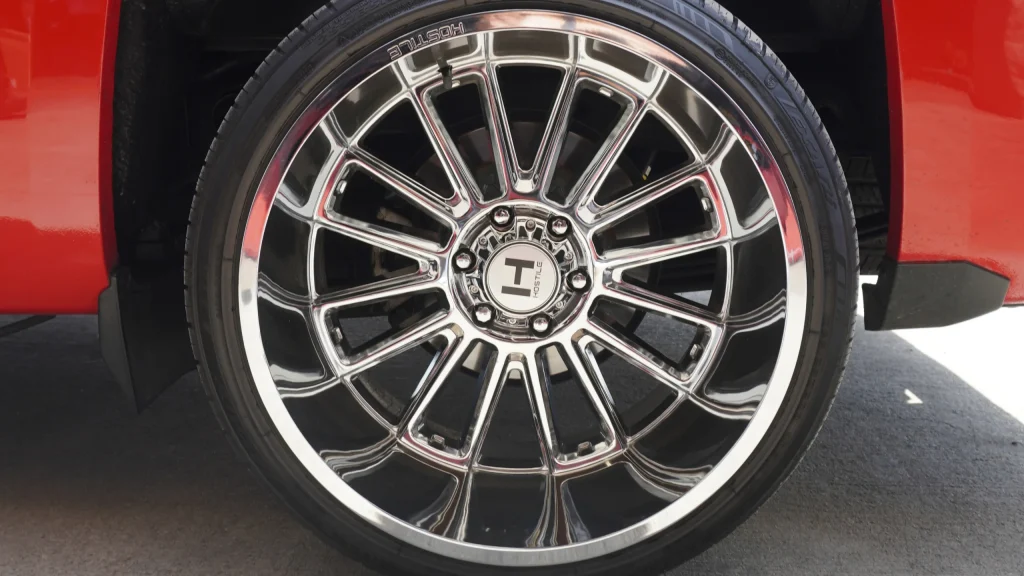
Sometimes you can see it. Park on level ground, turn the steering to full lock so the front wheel faces outward, and run a flashlight along the inner lip where the wheel meets the tire. Look for any section that is not a smooth, continuous circle: a flattened stretch, a dent in the lip, or an edge that bends outward where the rest does not.
On wheels with a hubcap or cover, pop it off first. Damage under a cover can go unnoticed for months.
Another check: watch the tire sidewall while someone rolls the car slowly forward. A wheel that is out of round can make the sidewall seem to rise and fall instead of turning evenly.
5. Cracks in the Wheel
Cracked wheel symptoms are less about feel and more about repetition. The tire holds air for a few days, then it does not. You get it checked, nothing turns up, and the cycle repeats. A crack can sit where a spoke meets the center or along the inner barrel, and it can be thin enough that it only shows once the wheel is cleaned and inspected off the vehicle.
A crack is a different problem from a bend: the wheel is no longer one continuous piece of metal in that spot. Treat any suspected crack as a stop-and-inspect issue, not something to keep an eye on.
6. Curb Rash: Cosmetic or Structural?
Not every mark means trouble. Curb rash on wheels covers a wide range, and what matters is depth and location.
Surface scuffing on the outer face, such as scraped paint or clear coat and light scratches across the spokes, is cosmetic. It looks rough and can hurt resale value, but on its own it is a looks problem.
A gouge that cuts into the outer lip or reaches the area where the tire seals is different. It can affect the seal, and it can be the visible end of damage that continues around the inside of the rim. If you can catch a fingernail in it, or the lip looks pushed in rather than just scraped, have it inspected.
Bent Rim or Unbalanced Tire?
Both cause vibration, which is why many drivers pay for a balance, feel no change, and assume the shop missed something.
An unbalanced tire means the weight is not spread evenly around the wheel and tire. It is usually corrected by adding small weights to the rim, and it solves the vibration when weight is the real cause.
A bent rim is a shape problem. The wheel is no longer a true circle, so it does not roll evenly no matter where the weights go. That is the usual tell: balancing helped briefly or not at all.
If you are unsure what each service fixes, this breakdown of wheel alignment vs. wheel balancing explains the difference.
Can You Drive With a Bent Rim?
It depends on the damage, and it is not a call worth making from the driver’s seat.
Light cosmetic scuffing with no air loss, no vibration and no change in handling is a schedule-it-soon situation. Keep an eye on the pressure and have it looked at.
Treat it as urgent if you have any of these: a tire that will not hold pressure, a visible crack, a strong or worsening vibration, or steering that feels unstable. Those are not things you want to discover at freeway speed on the 15 with your family in the car.
If you are not sure which group you are in, the safe default is to keep your speed down, skip long freeway runs, and get the wheel inspected before your next commute or trip out of town.
A Quick Monthly Wheel Check
Make it a routine. NHTSA recommends checking tire pressure monthly with an accurate gauge and keeping a gauge in your vehicle.
While you are at each tire, spend a few extra seconds on the wheel. Turn the front wheels outward, shine a light along the inner lip, and look for flat spots, dents or cracks. Note anything new.
Add one more trigger: any time you hit a pothole hard enough to make you wince, or scrape a curb while parking, check that corner within a day or two. Catching a bent lip early, while it is only a slow leak, beats finding out on the freeway.
Get Your Wheels Checked at Comtires in Ontario, CA
Wheel damage from a pothole often cannot be confirmed from the outside. A technician can take the wheel off, inspect the inner barrel and bead seat, and show you what is actually there instead of asking you to take it on faith. Comtires handles tires, custom wheels and alignment under one roof, so the diagnosis and the fix can happen in the same visit.
Want the bigger picture on tire care? Start with the ultimate guide to tires.