Why Wheel Alignment Is Essential for Fleet Vehicles
Fleet vehicles often spend more time on the road than personal vehicles. Delivery vans, service pickups, company cars and work trucks may travel long distances, carry equipment and face frequent stops, potholes, curbs and uneven entrances.
Over time, however, it can contribute to uneven tire wear, uncomfortable handling, and unplanned maintenance. The impact of misalignment on fleet operating costs can be considerable, affecting both efficiency and budget.
For drivers and small businesses managing several vehicles, regular fleet wheel alignment inspections can help protect tires, improve vehicle control, and keep work vehicles operating reliably.
What Is Wheel Alignment?
Wheel alignment refers to the position and angle of a vehicle’s wheels in relation to the road and the suspension system. Proper heavy-duty truck alignment is crucial for ensuring that the wheels point in the correct direction and sit at specific angles established by the vehicle manufacturer. When those angles change, the tires may no longer make even contact with the road.
A professional alignment service measures these angles and adjusts them when necessary. According to a 2026 industry report, regular alignment checks can reduce tire-related downtime by up to 40%.
Proper alignment helps the vehicle:
Travel in a straight line.
Maintain predictable steering.
Keep the steering wheel centered.
Distribute tire wear more evenly.
Respond correctly during turns and lane changes.
Alignment does not change the position of the tire on the wheel. Instead, it adjusts components in the steering and suspension system that control wheel position.
The Basic Wheel Alignment Angles
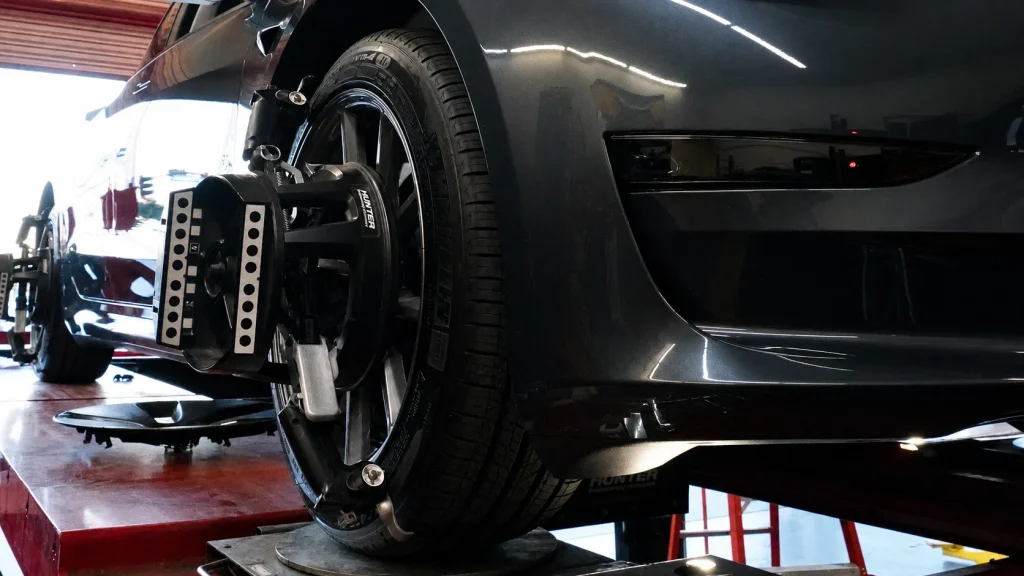
Technicians usually evaluate three main alignment angles: camber, caster, and toe.
Camber describes whether the top of the wheel tilts inward or outward when viewed from the front of the vehicle. Too much tilt may cause one edge of the tire to wear faster.
Caster affects steering stability and how easily the steering wheel returns to the center after a turn.
Toe describes whether the fronts of the tires point slightly inward or outward when viewed from above. Incorrect toe is a common cause of rapid or feathered tread wear.
Drivers do not need to understand every technical measurement. The important point is that small changes in these angles can affect how a vehicle drives and how its tires wear, influencing the impact of misalignment on fleet operating costs.
Wheel Alignment vs. Wheel Balancing
Wheel alignment and wheel balancing are different services.
Alignment corrects the direction and angles of the wheels. Balancing corrects uneven weight distribution in the tire-and-wheel assembly.
A vehicle that needs balancing may vibrate at certain speeds. A vehicle that needs alignment may pull to one side, have an off-center steering wheel, or develop uneven tire wear.
Because some symptoms overlap, a proper inspection is necessary before deciding which service the vehicle needs.
Both services can affect ride quality and tire performance, but they correct different problems. Read our guide to wheel alignment vs. wheel balancing for a clearer comparison.
Why Alignment Matters More for Fleet Vehicles
Fleet vehicles may experience alignment-related problems sooner because they often accumulate mileage quickly and operate under demanding conditions. The impact of misalignment on fleet operating costs can be minimized through proactive maintenance.
A work vehicle may travel the same route several times per day, enter driveways, cross loading areas, carry tools, or make frequent parking maneuvers. Each impact or repeated driving condition can contribute to gradual changes in the steering, suspension, or wheel angles.
One slightly misaligned vehicle may not seem like a major issue. Across several vehicles, however, tire wear and maintenance interruptions can become more difficult to manage.
Fleet Vehicles Accumulate Wear Faster
Vehicles used for deliveries, field service, construction, or transportation are often exposed to:
Potholes and uneven pavement.
Curbs and parking stops.
Frequent braking and turning.
Heavy or changing loads.
Long daily routes.
Multiple drivers with different driving habits.
These conditions do not automatically cause misalignment, but they can increase the likelihood of steering, suspension, and tire problems.
According to research from MIT, fleet vehicles operating in urban areas experience a 25% higher rate of alignment-related issues due to the frequency of stops and turns.
The more miles a vehicle travels while misaligned, the more noticeable the tire wear may become.
Alignment Problems Can Interrupt Daily Operations
A vehicle that pulls to one side or wears through tires prematurely may require an unscheduled visit to the shop.
For a personal vehicle, this is inconvenient. For a work vehicle, it may also delay deliveries, appointments, or customer service.
Preventive alignment inspections can help identify problems before they lead to:
Early tire replacement.
Driver complaints.
Steering difficulties.
Additional suspension wear.
Unexpected vehicle downtime.
Alignment should therefore be treated as part of routine fleet maintenance, not only as a repair after a serious problem appears.
How Poor Alignment Affects Tires and Driving
Incorrect alignment can affect several areas of vehicle performance, including the impact of misalignment on fleet operating costs.
The most visible consequence is usually irregular tire wear, but drivers may also notice changes in steering, handling, and ride comfort.
Uneven and Premature Tire Wear
A properly aligned vehicle should allow the tires to contact the road evenly.
When the wheels sit at incorrect angles, one part of the tread may carry more load than another. This can create wear on the inner edge, outer edge, or across individual tread blocks.
Common patterns include:
Excessive inner-edge wear.
Excessive outer-edge wear.
Feathered or rough tread edges.
Different wear between tires on the same axle.
Rapid wear on recently installed tires.
Replacing the tires without correcting the underlying alignment problem may cause the new set to develop a similar wear pattern.
For fleet vehicles that accumulate mileage quickly, regular tire inspections are especially important. Drivers should compare the inner and outer edges of each tire instead of looking only at the center of the tread.
Steering and Handling Problems
Poor alignment can also change the way a vehicle feels on the road.
Possible symptoms include:
Pulling or drifting to one side.
An off-center steering wheel.
Constant steering corrections.
Reduced stability.
Uneven steering response.
A different feeling after hitting a pothole or curb.
A vehicle that pulls is not always misaligned. Tire pressure differences, road slope, worn tires, damaged components, and suspension problems can produce similar symptoms.
That is why a complete inspection should include the tires, steering, and suspension rather than assuming alignment is the only cause.
Fuel Efficiency and Rolling Resistance
When the wheels are not traveling in the correct direction, the tires may create additional rolling resistance.
This can make the vehicle work harder to maintain speed. However, alignment is only one factor that can influence efficiency.
Research from Stanford shows that misaligned fleet vehicles can see a 3% decrease in fuel efficiency due to increased rolling resistance.
It is better to view proper alignment as one part of an overall preventive maintenance program rather than promise a specific amount of fuel savings.
Vehicle efficiency depends on several factors, including tire pressure, vehicle condition, cargo and driving behavior. The U.S. Department of Energy recommends comprehensive maintenance as part of efficient fleet operation.
Signs a Fleet Vehicle Needs an Alignment
Drivers and fleet owners should watch for changes in tire wear and steering behavior.
Common warning signs include:
The vehicle pulls to one side.
The steering wheel is not centered while driving straight.
One edge of a tire wears faster.
The driver constantly corrects the steering.
The vehicle feels different after a road impact.
New tires begin wearing unevenly.
Steering or suspension work was recently completed.
The vehicle feels less stable than usual.
These symptoms should not be ignored, especially when the vehicle travels many miles each week. Regular checks can mitigate the impact of misalignment on fleet operating costs.
Driver Feedback Is an Early Warning Tool
The person driving the vehicle every day is often the first to notice a problem.
Drivers should be encouraged to report:
Strong pothole or curb impacts.
Changes in steering response.
New vibrations.
An off-center steering wheel.
Unusual tire noise.
Pulling or drifting.
Changes in vehicle stability.
A simple reporting process can help small fleet owners detect problems before the tires show severe damage.
Vibration should not automatically be blamed on alignment. It may also come from wheel balancing, tire damage, wheel damage, or worn suspension parts.
What Causes Fleet Vehicles to Lose Alignment?
Commercial vehicle wheel alignment shifts gradually and sometimes suddenly from a combination of road hazards and mechanical wear. Potholes and curb strikes are the most abrupt culprits, delivering sharp, localized force to suspension components. Uneven loading dock entrances and rough job-site access roads create repeated low-grade stress that compounds over thousands of miles. And worn steering or suspension components allow alignment angles to drift even when roads are smooth, as Discount Tire notes.
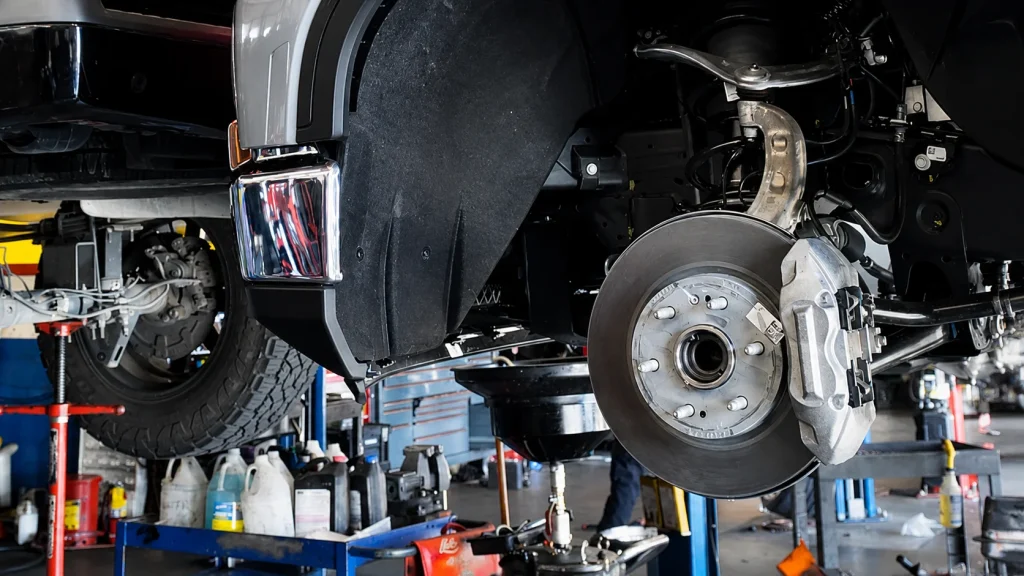
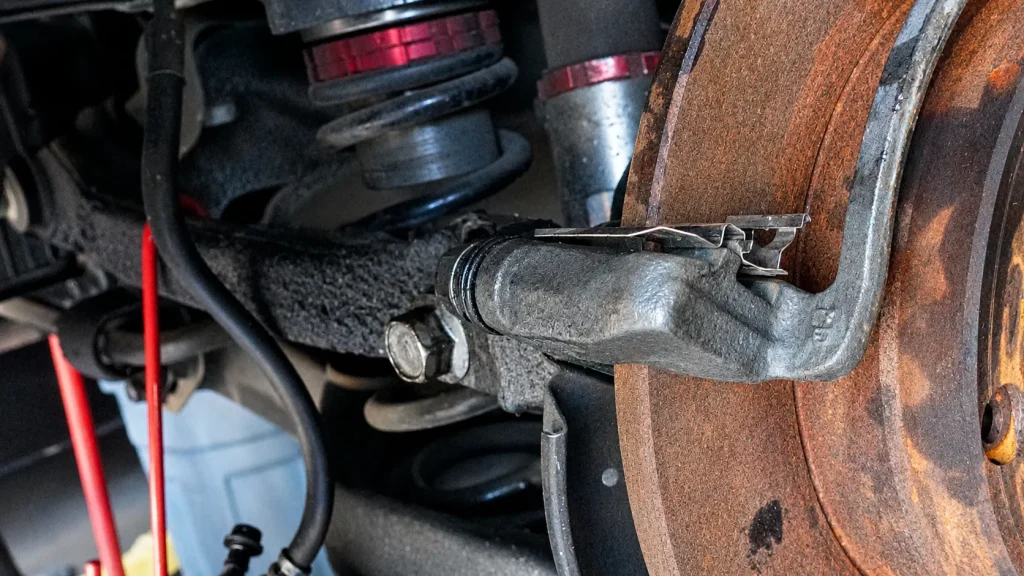
Worn tie rods, ball joints, bushings, control arms, shocks or struts can affect wheel position and prevent an alignment from holding correctly. Learn more about these components in our complete guide to vehicle suspension.
The Bottom Line on Fleet Alignment
Consistent fleet tire maintenance is one of the highest-return investments a fleet manager can make. Misalignment can quietly drain budgets through accelerated tire wear, reduced fuel efficiency, and elevated safety risk.
Misaligned wheels can cut tire life by up to 25%, compounding costs across every vehicle in a fleet.
Fuel economy drops measurably when rolling resistance increases from poor alignment.
Early warning signs — pulling, off-center steering, uneven wear — signal it is time to act.
Road hazards and worn suspension components are the leading causes of alignment drift.
Knowing when to schedule a check is just as important as knowing why.
When Should Fleet Vehicles Get an Alignment Check?
Alignment timing should follow vehicle condition, not a fixed mileage clock. Watch for a pull to one side, an off-center steering wheel, or uneven tire wear on fleet vehicles — each signals that geometry has shifted. Schedule a check after any hard pothole or curb strike, and always after replacing steering or suspension components, since new parts reset baseline angles that require professional verification.