Type your paragraph here
If you’ve ever felt your car vibrating at highway speed or noticed it drifting to one side, you’ve likely wondered whether you need a tire balance, a wheel alignment, or both. These two services are often mentioned together — but they address entirely different problems, and mixing them up means you could pay for the wrong fix while the real issue goes unresolved. Wheel alignment cost and balancing cost also vary, so understanding which service applies to your situation matters before you book an appointment. This guide breaks down exactly what each service does, what symptoms point to each one, and how to decide which your vehicle actually needs.
Tire Balancing vs Wheel Alignment: The Quick Answer
Tire balancing and wheel alignment are two distinct services that address different mechanical problems — and confusing the two can leave you chasing symptoms without fixing the real issue.
Balancing corrects uneven weight distribution across a tire and wheel assembly. Alignment corrects the angles at which your wheels make contact with the road, adjusting components within the suspension system. They sound similar, but they solve completely different problems.
The symptoms each service addresses offer the clearest distinction:
Car vibrating while driving — especially through the steering wheel or seat — typically points to a balancing issue.
Vehicle pulling to one side or a steering wheel that sits off-center at highway speed generally signals an alignment problem.
Irregular tire wear can result from either issue, which is why a visual inspection alone won’t always tell you which service you need.
Wheel alignment cost and balancing cost also differ, so knowing which service applies to your situation prevents unnecessary spending. Understanding each service on its own terms is the most reliable way to diagnose what your vehicle actually needs — starting with what tire balancing is and how it works.
What Is Tire Balancing?
Unbalanced tires can affect how smoothly your vehicle drives, especially as speed increases. While these symptoms can have other causes, they are common signs that your tires and wheels may need to be checked.
Steering wheel vibration: Shaking or vibration through the steering wheel can be a sign of a balance issue, particularly when driving at higher speeds.
Vibration through the seat or floor: If you feel the vibration more through the seat or vehicle body, one or more rear wheels may be involved.
Irregular tire wear: Uneven or unusual tread wear can sometimes develop when a tire and wheel assembly is not rotating smoothly.
Rougher ride quality: A vehicle that feels less smooth than usual may have a tire balance issue, although suspension, tire condition, or road surface can also play a role.
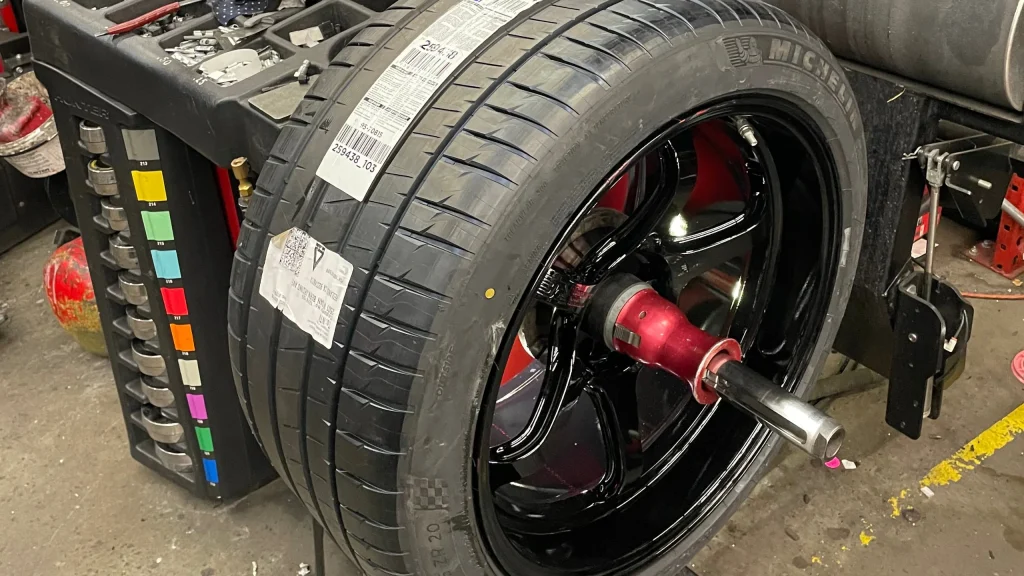
If the vibration is persistent or getting worse, a professional inspection can help determine whether balancing, alignment, tire damage, or another issue is causing the problem.
What Is Wheel Alignment?
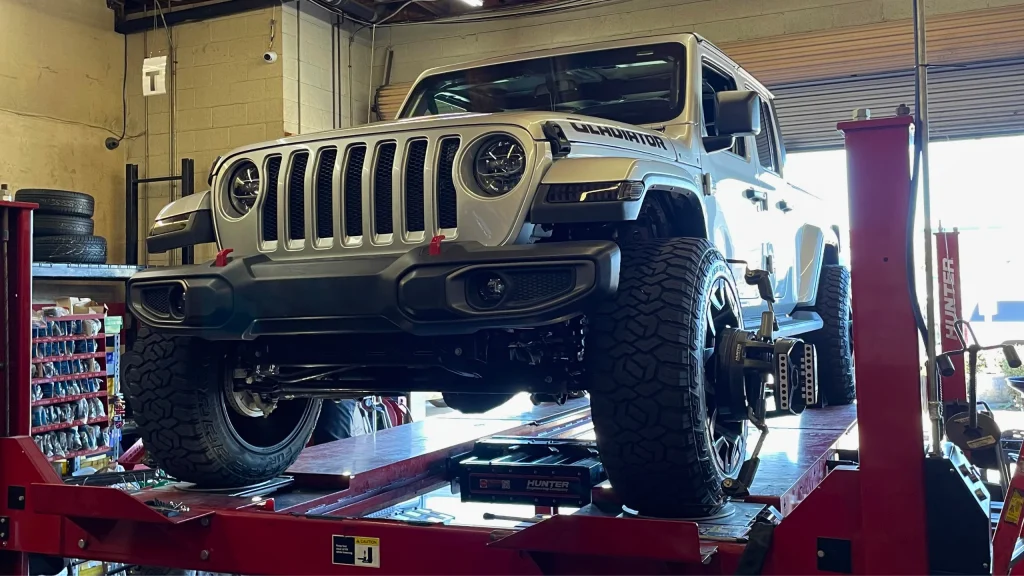
Wheel alignment is the process of adjusting the angles of your vehicle’s wheels so they are positioned correctly according to the manufacturer’s specifications. Unlike tire balancing, alignment focuses on how the wheels interact with the steering and suspension systems rather than how evenly the tire and wheel assembly rotates.
Proper alignment helps the vehicle track more predictably, supports even tire wear, and can improve overall handling. Road impacts, potholes, curbs, and worn suspension components can contribute to alignment changes over time.
Signs Your Wheels May Be Out of Alignment
Wheel alignment problems often affect how the vehicle steers and how the tires wear. Common warning signs include:
Vehicle pulling to one side: If your car consistently drifts left or right while driving on a straight, level road, the alignment may need to be checked.
Off-center steering wheel: The steering wheel should generally remain centered when the vehicle is traveling straight. A noticeable tilt may indicate an alignment issue.
Uneven tire wear: Excessive wear on one side of the tread can be associated with incorrect alignment angles.
Wandering or unstable steering: If the vehicle requires frequent small steering corrections to stay in its lane, alignment or suspension components may need inspection.
These symptoms can also have other causes, including tire pressure, tire condition, or suspension problems, so a professional inspection is the best way to determine the source.
If you’re noticing pulling, an off-center steering wheel, or uneven tread wear, learn more about the signs you need a wheel alignment.
Tire Balance or Alignment? How to Tell What Your Car Needs
When it comes to tire balancing vs wheel alignment, the symptoms your car shows are usually your clearest diagnostic clue and knowing the difference can save you from paying for the wrong service.
Vibration is the hallmark of a balancing problem. If you feel a steering wheel shimmy or a buzz through your seat that intensifies as you accelerate, an out-of-balance tire is the most likely culprit. On the other hand, if your car drifts to one side on a straight road, or you notice uneven tire wear on just one edge, alignment is typically the issue.
In practice, the two problems aren’t always mutually exclusive. A car that’s been in a minor collision or hit a significant pothole may need both services at once, these are two distinct maintenance items — and misidentifying the problem means the root cause goes unresolved. When in doubt, a quick inspection at a qualified shop will confirm which service your vehicle actually needs, setting you up to make the right call before vibrations or wear patterns get worse.
If Your Car Vibrates
When vibration is your primary symptom, the tire balance vs alignment question almost always points in one direction: a balancing problem.
Uneven weight distribution is the root cause here. When a tire and wheel assembly isn’t balanced, even a small imbalance — sometimes as little as half an ounce — creates a rhythmic wobble that travels through the floorboard, seat, or steering wheel as speed increases. Vibration that intensifies between 45–65 mph and then smooths out at higher speeds is a classic sign of an imbalance, not an alignment issue.
Speed sensitivity is your key diagnostic clue. Alignment problems tend to produce consistent pulling or drifting regardless of how fast you’re going. But if the shaking comes and goes with your speedometer, a wheel balance service is almost certainly the fix. And if vibration appears suddenly after hitting a pothole or curb, that impact likely knocked a wheel weight loose.
Steering wheel vibration narrows things down further — it typically points to a front-wheel imbalance, while vibration felt in the seat often indicates a rear-wheel issue. That said, severe vibration left unchecked can accelerate wear on suspension components and wheel bearings, compounding the repair cost over time. If you’re noticing a pull alongside the shake, that combination might suggest more than one issue at play — which is worth exploring next.
If Your Car Pulls, the Steering Wheel Is Crooked, or You’re Wondering About Wheel Alignment Cost
When your car drifts to one side or your steering wheel sits off-center at highway speed, alignment — not balance — is almost always the cause.
Wheel pull is one of the clearest signals in the wheel balance vs alignment debate. Balancing corrects weight distribution; it doesn’t change the angle of your wheels. If your tires are pointed even slightly off-axis, the vehicle will consistently track toward the low side. You’ll feel it as a steady tug against the wheel rather than an intermittent shimmy.
A crooked steering wheel tells a similar story. If the wheel sits noticeably left or right while you’re driving straight, your toe or camber angles are out of spec, misaligned wheels affect steering geometry in ways that no balancing service can correct.
The practical test is straightforward: find a flat, empty road and briefly release the wheel. If the car drifts consistently in one direction, book an alignment check. If it tracks straight but you feel a buzz through the seat or wheel, a balancing is the more likely fix. And if you notice both pulling and uneven tread wear appearing together, there’s a good chance tire wear patterns are compounding the problem — which is exactly what the next section breaks down.
If Your Tires Are Wearing Unevenly
Uneven tire wear is one of the clearest signs your car needs attention — but the pattern of that wear tells you whether alignment or tire balancing is likely the culprit.
Wear pattern as a diagnostic tool. Not all uneven wear looks the same. Feathering — where the tread is smooth on one side and sharp on the other — typically points to a toe alignment issue. One-sided wear, where the inner or outer edge wears down faster than the rest of the tread, usually signals a camber problem.
What tire balancing causes. Imbalance tends to create a different signature: cupping or scalloping, where the tread dips and rises in a wavy pattern around the tire’s circumference. This happens because an imbalanced wheel bounces slightly as it rotates, causing inconsistent contact with the road surface.
Why this distinction matters. Treating the wrong problem won’t fix the wear — and it won’t stop it from happening again. In practice, a technician will often find that both issues are present simultaneously, which sets up an important question worth exploring next.
Can You Need Tire Balancing and Wheel Alignment at the Same Time?
Yes, you can absolutely need both services at the same time — because they fix completely different problems, and one has no effect on the other.
A balanced wheel simply means the weight is distributed evenly around the tire. But that same wheel can still point in the wrong direction, wear at the wrong angle, or pull your car sideways — all alignment issues that balancing won’t touch. Conversely, a vehicle with perfect wheel alignment can develop a vibrating shimmy the moment a wheel weight falls off or a tire wears unevenly. The two systems operate independently, so fixing one tells you nothing about the state of the other.
In practice, shops often catch this pairing together. You bring the car in for a vibration, the technician spots both an imbalanced front tire and a toe measurement that’s drifted out of spec. Both problems are real, both affect your tires differently, and both need correction. Skipping either one means you’re only solving half the issue — and the remaining problem will keep wearing your tires down.
That’s worth keeping in mind as we look at why maintaining both services matters for your tires, your fuel economy, and your overall driving experience.
Why Alignment and Balancing Matter for Your Tires
Keeping up with both tire balancing and wheel alignment isn’t just about fixing problems — it’s about protecting your tires, your ride quality, and your safety over the long run.
Even tire wear is the most direct benefit. Misalignment causes tires to scrub against the road at the wrong angle, eating through rubber unevenly and cutting tire life short. Addressing the signs of unbalanced tires early — vibration, shimmy, or uneven tread — prevents the same kind of premature wear from the balancing side of things.
Ride quality improves noticeably when both services are current. Vibrations smooth out, road noise drops, and that subtle pull you’ve been compensating for disappears. And vehicle handling sharpens too — properly aligned and balanced wheels give you more confident steering response, which matters most when you need to react quickly.
Together, these services are straightforward maintenance that keeps your tires lasting longer and your car behaving predictably. If you’re not sure which one you need right now, that’s exactly what a professional inspection is for.
Balancing and alignment are only two parts of proper tire care. For more information on pressure, tread depth, rotation, replacement, and maintenance, explore our Ultimate Guide to Tires.
Get Your Tires and Alignment Checked in Ontario, CA
If you’re noticing vibration, pulling, or uneven tire wear, those are clear signs you need a wheel alignment, tire balancing, or possibly both — and the sooner you act, the better.
Don’t wait for a small problem to become an expensive repair. Here’s what your car may be telling you:
Vibration in the steering wheel or seat? That points to an out-of-balance tire.
Vehicle pulling left or right? That’s a classic alignment issue.
Uneven or rapid tire wear? Either service — or both — could be the culprit.
Not sure which you need? A professional inspection takes the guesswork out of it.
Both services are straightforward, affordable, and essential to keeping your vehicle safe and your tires lasting as long as possible. If you’re in Ontario, CA, Comtires is ready to diagnose the issue and get you back on the road with confidence.